Wednesday, August 29, 2018

Year 1: Visual Research for Set Designs

In order to build your repertoire of Theatrical Set Design, I'd like you do some Visual Research in which you find sets that are interesting and intriguing. These can be from shows that you've seen (or not). Just be sure to include the correct citation.
Be sure to include an explanation as to why you were inspired to choose this particular set and what stands out for you. Label each image according to which criteria you used.  

Ensure that the images are in the LARGEST setting possible (without overtaking the whole page).  Each piece must must include the following citing information: 
1) Source (What website did you get it from?)
2) Title of the Play that the Set Design 
3) Theatre Company that produced the play
4) Set Designer
5) Date of Production

You can find the images anywhere, but here is a link to Set Designers may be helpful (but be aware that you might need to click around): Theatre Links. 

Try to find 10 Sets that meet the following criteria:
1) Set that clearly demonstrates MOOD
2) Set that excels with its use of a strong COLOR SCHEME
3) Set that uses LIGHT (and/or Shadow) to set the stage
4) Set that with a strong sense of LINES
5) Set that uses TEXTURE effectively
6) Set that clearly marks MODERN REALITY  (REALISM)
7) Set that show the REALITY of a HISTORICAL TIME PERIOD (REALISM)
8) Set that shows an ABSTRACT idea or CONCEPT (SYMBOLIC)
9) 2 sets that you particularly enjoy 

____________________________________________
FOR EXAMPLE: 
Medea - Set design by R. Finkelstein
"Medea" designed by Richard Finkelstein for James Mason University's production in 2007
(Image courtesy of: rfdesigns.org)
Abstract Design: This is an abstract design because the broken tiles, along with the gauzy background is not realistic. I really appreciate this design because it puts in a place, with space to work in without being a realistic. The tiles suggest a Mediterranean locale-- Greece? One assumes with the Greek myth of Medea this is Greece. The broken pieces and fractured stage also suggests that the time period is turbulent and falling apart.  I'm sure it was an extremely time consuming process to realize (especially the design within the tiles). 


Stage A Moment of Theatre

As you think about staging your moment of theatre, think about how you will create the

  • Tension
  • Emotion
  • Atmosphere 
  • Meaning
For your two moments, try to find CONTRASTING moments to highlight! 
Staging of "Hello Little Girl"
From "Into the Woods"
Courtesy of Emily Grimes

Possibilities for BLOCKING:
Staging Configurations: Proxemics
Courtesy of: Black Box Education
YEAR 2: FULLY COMPLETED DRAFT DUE MONDAY! 

Tuesday, August 28, 2018

Year 1 -- A Scene With a Tree

How can one object change depending on the mood?

In our exercise today, I asked you to draw a scene with a tree. Depending on the moods, your trees changed shape, colors and forms.
My Scenes with a Tree Drawings
Image courtesy of Emily Grimes

For homework, please draw one more tree with a guiding mood/word.  Afterward, take a picture of your 6 trees and add a reflection to your blog.

Reflect on this exercise: 
What do you notice about the different trees? What impact did the GUIDING MOOD/PHRASE have on your drawings? What do you notice about LINES, COLOR and SHAPE/FORM? What did you learn from this exercise? Did you enjoy the exercise? Why or why not?

Copy the link in the comments below!

YEAR 2 -- Making Choices!

Year 2: After you have a solid guiding inspiration, begin making your specific choices for the show. Keep in mind you will have a General description of Design & Technical elements THEN will talk about 2 moments of time.

I would like to see approx. a page on each of the choices
*Staging
*Blocking / Movement 
*Costumes / Hair / Make-up
* Set (and sometimes props)
* Lights / Projections
* Sound / Music
* Publicity (optional)

Make sure you include a variety of images and text! Images include:

  • Sketches
  • Inspirational Images
  • Photographs demonstrating something (ie movement) 

It is ESSENTIAL that you justify in your notes and writing about why you chose what you did!

Here are some pages with examples of images to include:
Sample Director's Notebook
Notice how the author uses text AND images to explain the choices s/he made


Source ibo.org

Excerpt from Director's Notebook
Examining Costume Choices for Main Characters

Source: Eliza Knode (2018)

Excerpt of Director's Notebook
Notice how she includes both text, inspirational images AND a photo demonstration
Source: Sofia Helou, 2018

Sample Director's Notebook
Notice how the author uses text AND images to explain the choices s/he made


Source ibo.org


RIP Neil Simon

Neil Simon, Broadway’s long-reigning king of comedy, dies at 91
 Neil Simon in 1994. Photograph: Gary Stuart/AP
Image courtesy of theguardian.com

Click here 
to watch some scenes from Neil Simon's most well-known shows including:

  • Barefoot in the Park
  • The Odd Couple 
  • Promises, Promises
  • And more
Here's the beginning of Neil Simon's Obituary from the Washington Post. 

Neil Simon, the Pulitzer- and Tony-winning author of such plays as “The Odd Couple,” “Barefoot in the Park” and “Lost in Yonkers,” who died Aug. 26 at 91, was often called the world’s most popular playwright after Shakespeare.
Time magazine proclaimed him the “patron saint of laughter.” His shows, with an arsenal of sarcastic wit, became highly entertaining staples of high school and community theaters, and they popped up on stages as far away as Beijing and Moscow. But mostly, he dominated Broadway like no other playwright of the past half-century.
Hardly a year passed from 1961 to 1993 without a new production by Mr. Simon, a colossally successful run of comedies and comic dramas on topics such as romance, adultery, divorce, sibling rivalry, cancer and the fear of aging. Several are regarded as classics of 20th-century American theater.
Frequently, Mr. Simon’s plays centered on white, middle-class Americans — mostly New Yorkers and mainly Jews — but the characters were universally relatable. He considered himself “an investigator” of the quotidian. “I don’t write social and political plays, because I’ve always thought the family was the microcosm of what goes on in the world,” Mr. Simon told the Paris Review in 1992. “I write about the small wars that eventually become the big wars.”
His output included dozens of plays, the scripts for five hit musicals, more than 20 screenplays and two volumes of memoirs. Many of his earliest shows were directed by Mike Nichols, who once said that much of Mr. Simon’s work will endure because of its “recognizability” — mining laughs from situations familiar to a vast middle-class public.
Click here to read the obit in its entirety.

Guiding Inspiration

Directors have different ways to help inspire their designers, but usually at the first production meeting s/he goes over the vision of the show, which includes:
  • Director's Concept
  • Guiding Inspiration: Images / Quote / Song / Idea (etc.) 
This Guiding Inspiration will help to ensure that all of the designers are creating work that comes from the same source of inspiration. 

Sometimes it takes a while to find your Guiding Inspiration. In fact, an inspirational board with a range of images might be helpful. For example: 


Other times, you may find the perfect Guiding Inspiration in just one piece: 

Guiding Inspiration for Seedfolks -- London Tube Map
Source: TFL Maps Image from: bbc.com

Guiding Inspiration for Shrek -- Organic and Original

Pink Floyd's Another Brick in the Wall Concert -- Berlin
Guiding Inspiration for "Another Brick in the Wall"
Image courtesy of: intelligentanswers.com

IB Year 2's -- As you move forward making design choices, please make sure have a piece of Guiding Image that will help to guide your work! 

Saturday, August 25, 2018

Reflecting on MOMENTS in Professional Theatre


Sample Moment of Team -- courtesy of Emily Grimes
Post-It One--Description
A short description of the moment. Describe what you saw and heard in that moment. Think about putting the image that was in your head in words. Be clear about using theatrical vocabulary (downstage, in the wings, on a fly, etc.). Don't forget to describe the technical and design elements for the show! Sometimes an image or drawing would be helpful too.

Post-It Two-Personal Reaction
How did this moment affect YOU as an audience member? What did you think/feel when you experienced it?

Post-It Three -- Significance
What significance did this moment have on...

...the show. What role did this moment have in the story. the character, the theme?

...you, as a theatre-practitioner? How might this moment inspire you or change your views as to what theatre is?
Books in to Birds Moment in "The Magic Flute" in ENO (English National Opera), London
(NOT Theatre Complicite, but the same concept). Image: operatoday.com

Theatre du Complicite: The Street of Crocodiles Script Cover
image: Methuen Drama

Recent production of Street of Crocodiles. This image helps you to see the physicality used by the entire company at a give the sense of how the group would envelope the scene. Image: twitter.com @streetcrocsBSA
Year Ones HW: Analyze ANOTHER moment from a theatre production you have seen recently. If you do this in your physical journal, please take a picture and add to your blog. Include the URL here in the comments! 

Wednesday, August 22, 2018

Year 1's -- Director's Concept

Using the method from class today, I would like you to examine two of the professional shows you have seen and write a director's concept for those shows. 

Think about: 
  • What is the big idea the director is trying to emphasize? 
  • What about that big idea does s/he want to say/show? 
Additionally, add a sentence as to what the choices were made to emphasize the director's concept.

Be sure to include an image from the production (with citation -- Title of Piece, Photographer, Website URL). 

Lastly, write your own director's concept for one of the scripts we examined (Copies, Image is Everything or Baalzebub). What do YOU want to emphasize? What impact do YOU want to have on your audience? 

Please include a link to your blog in the comments below. 

Sunday, August 19, 2018

Steal Like an Artist

The key to being an artist...


Visual Research --The MLA Way

How do the main ideas, IMAGES, SYMBOLS and lines help us to artistically explore the main themes?

How can visual research help us to figure out what we want to say and HOW we will say it? 

1) Think about what the text offers you, paying particular attention to information that includes SENSORY details.

Let this guide your visual research. Take note of what you find intriguing/inspiring about each of the images throughout. You are trying to find a guiding image that will really help to frame your piece.

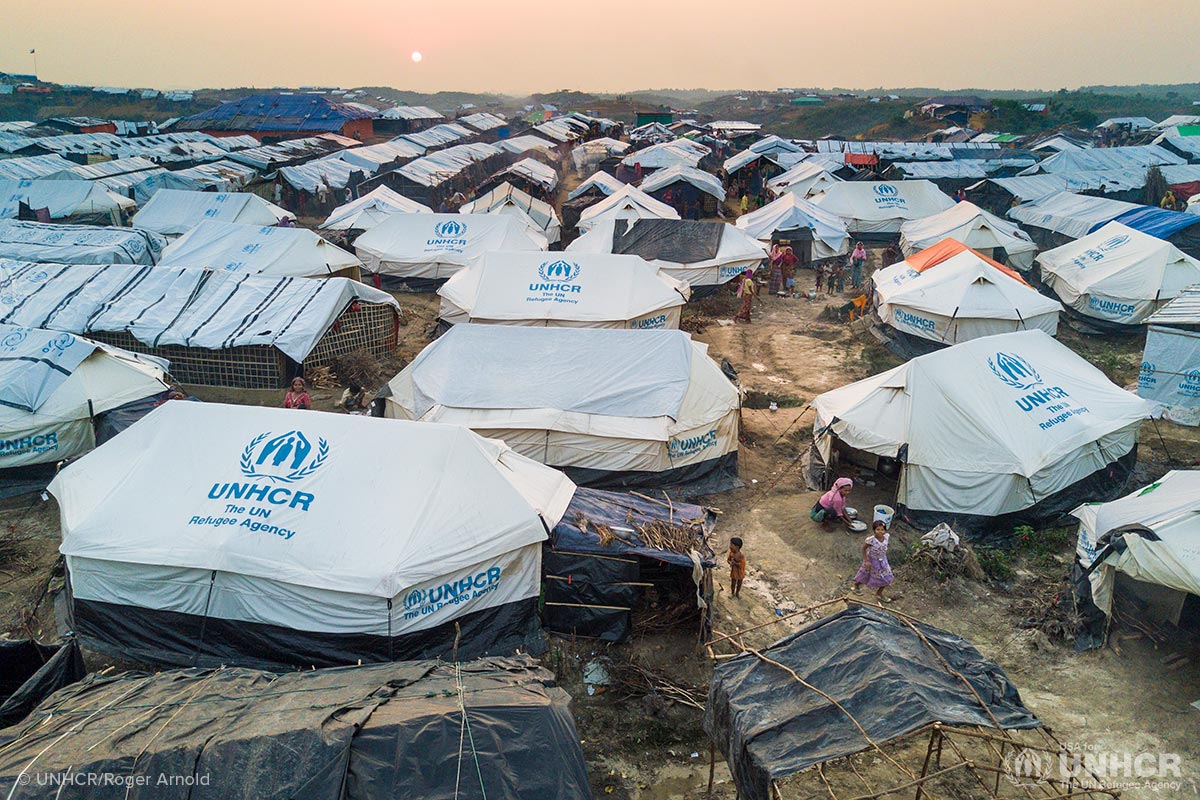
For example: When I search UNHCR Refugee Camp, these images were the two I found inspiring.
"Installation Model UNHCR Refugee Camp"; www.kickstarter.com/projects/87205916/
Tents set up at a Rohingya refugee camp
"Latest Updates on the Rohingya Refugee Crisis", www.unrefugees.org
2) REFINING Your Visual Research: It's essential to be resilient and try a variety of different ways to search (and find) the images you're looking for.

For example, when I added "Abandoned Refugee Camps", I came upon this image, which I found inspiring, especially as Beelzebub is an ancient religious devil.

"An abandoned church in a Vietnamese refugee camp on a deserted island in Malaysia." Photo by HENG FU MING on Wikimedia Commons, www.pinterest.com/pin/573153490063076849.
"Baalzebub (Lord of the Flies)" by: Louis Le Breton, gallica.bnf.fr.
3) It's important that you explore and make discoveries in this process! You are deciding which images work best for your ideas and are solidifying them through this process!

4) Try to find a GUIDING INSPIRATIONAL IMAGE (song, phrase, etc.) that will help you to answer the question: How can visual research help us to figure out what we want to say and HOW we will say it? 

Sometimes it's difficult to know when to stop exploring, but if you find yourself returning to an image or idea, that might be a clue! How does a particular image help you to really show what you're trying to say?

5) Show your progression. Don't be afraid to show how you got to your final image! The IB (and I) want to know how you got to where you ended up!

____________________
Homework:
Complete your Online Inspirational Visual Research for your Director's Notebook play (Year 2) or Baalzebub (Year 1).  Make sure you have a series of images that help you to explain what you want to show about your piece. You should write a sentence or two about each image and why you chose it.

Suggestion: Year 2s should print out and add to their physical journals for the final DN.

Click here for instructions on How to Cite an Online Image (MLA Style)

Play Review Schedule

Year 1s are expected to present five Play Reviews for the semester. One must be a play which was read. Additionally, one play must be viewed (either live on on Digitial Theatre Plus).  This will be a summative grade.

Here are the deadlines for your Play Reviews:

Review #Sofia PricoloRosanneLizXandaoNONENONE
1Aug. 16Aug. 20Aug. 22Sept. 10Aug. 28Aug. 30
2Sept. 12Sept. 14Sept. 10Sept. 18Sept. 14Sept. 18
3Sept. 20Oct. 1Oct. 3Oct. 5Oct. 9Oct. 15
4Oct. 18Oct. 25Oct. 29Oct. 31Nov. 5Nov. 7
5Nov. 30Nov. 13Nov. 21Dec. 4Dec. 4Dec. 6

Thursday, August 16, 2018

Exploration of Big Ideas

Mind Map -- Create a brainstorm map with images and words that helps to explore the different themes and ideas. Be sure to identify significant images, motifs/symbols--ideas and words used repeatedly throughout the piece--along with quotations that are important.

Round 1 - What are the BIG IDEAS in the play?
(For example: Illegal Immigration, Bullying, Personal Responsibility, etc.) 

Round 2 - How are these big ideas seen in the play?
Identify: 
Key moments / lines
Images/symbols

Round 3 - How can I connect those BIG IDEAS to the world? (Think about modern times, as well as other moments in the world. Think about really expanding your ideas to things outside of theatre. These are the valuable pieces that will help us to think more about design and our message.)  

Homework: 
Complete your mind map for the play you worked on  Year 2s = DN Play Year 1s=whether this is one of the other plays put forward OR another play you have seen/read.) All 3 levels of the mind map should be complete and in different colors.

BE SURE TO CITE ALL SOURCES, INCLUDING IMAGES! 

IB Mindmapping - courtesy of: mrexham.files.wordpress.com

Monday, August 13, 2018

Peer Review of Part I of DN

Today you will read and comment on your peer's work. Your feedback is invaluable, so take your time to ensure your answers are thoughtful.

LINK to Peer Review Sheet. Please share with Ms. Grimes & your peer.

Year 2: Director's Notebook Deadlines

You must demonstrate an understanding of...AssignmentApprox. pagesDue Date
Basic understanding of the plot, characters and themeBasic Plot summary 1-2 Monday, August 6
Identification of cultural, social and/or theoretical aspects of the play/playwright/performanceResearch Questionsn/aTuesday, August 14
Research cultural, social and or theoretical aspects of the play / playwrightWritten report of the key elements of cutlural/social/theoretical apsects of the play and/or playwright with cited sources (and bibliography)1-2Thursday, August 16
ARTISTIC exploration of themes, imagery, symbols/motifsMind Map on main themes/ideas, including sketches with visual research 1-3Monday, August 20
Director's Concept -- outlining the intentions & impact on audienceCohesive Director's Concept & Statement of Intention1Wednesday, August 22
Connection of your exploration & ideas for the performance to numerous live performances which have served to inform, influence or inspire you as a directorWritten component with visual research1-2Friday, August 24
Specific choices about: audience, space, acting/movment, sound, lights, set, costumes, props, publicity for the ENTIRE showVisual sketches/collages & Write up5-10working in class, but final choices completed Monday, September 3
Select two moments of theatre & how you will stage them to demonstrate TEAMVisual sketches/collages & Write up (see previous)2-5working in class, but final choices completed Monday, September 3
Final Draft Due -- 20 PagesPeer Feedback --Ms. Grimes will give you feedback along the way, but will not look at your pieces once she has given you the initial feedback. This is your opportunity to have a peer to give feedback.NO MORE THAN 20at the start of class Monday, September 3
Final DIRECTOR'S NOTEBOOK Due Strict deadline NO MORE THAN 20At the start of class Monday, September 10

Friday, August 10, 2018

For next class...

Please make sure you have the following for next class:

ALL
-Signed Syllabus

Year I
--Journal: Please write (academically) about 2-3 of the most significant elements in your PERSONAL context that affect the theatre you do (or would like to do).
--Decorated 1st page of your physical journal
--Set up &personalize your new IB Theatre Blog (with a super creative title that relates to Theatre)
--Send Ms. Grimes the link (emily.grimes@graded.br)
--Play Review into Ms. Grimes

Year 2
--2 Research questions assigned to you (From class)
--Google Doc with Research Questions that you will examine for your Director's Notebook (shared with Ms. Grimes). This should can be comments on your draft if you would like. Make sure it helps you to have a deeper understanding of the role that CONTEXT plays in understanding the THEMES of the play.

Remember to think about:

  • Context of the ideas present in the PLAY
  • Context of the PLAYWRIGHT
  • Context of the ERA the play was originally written
  • Context of the ERA the play was performed

--Copy of Draft of Part I (Summary, Themes) to Ms. G
--Completed Play Review

Monday, August 6, 2018

Year 2's Looking Ahead...

As we move into YEAR 2 of the IB Theatre Program, it's important that you are aware of what's coming up. Take a look at the big deadlines for next year and start thinking about how you can be successful in the four assessments:


Year One At A Glance -- YEAR ONES


Sunday, August 5, 2018

Live Performance This Weekend. Are You Interested?

Let's start the year off right with some intriguing visual performance: Grupo Corpo's Gira


Here's an English translation of what Gira is all about:

The umbanda rites - the most worshiped of the religions born in Brazil, the result of the fusion of Candomblé with Catholicism and Kardecism - are the great source of inspiration for the scenic aesthetics of Gira. 
Exu, the most humane of orixás - without which, in African-born religions, the cult simply does not work - is the poetic motive that guides the eleven musical themes created by Metá Metá to Gira.

Diving into the universe of Afro-Brazilian religions to align themselves with the theme proposed by Metá Metá were the first steps taken by the creators of Grupo Corpo. But he is deceived who thinks that he will attend a mimetic representation of Afro-Brazilian cults. Fueled by his experience in celebrating rites of candomblé and umbanda (especially the Exu tours), Rodrigo Pederneiras (re) builds the powerful glossary of gestures and movements to which he has had access. 

Conceived as an installation, the non-scenario signed by Paulo Pederneiras covers with the same black tulle the bodies of the dancers whenever they are out of the scene, transforming them into ether, and the three walls of the black box, creating an almost spectral illusion of infinity. In the costumes, Freusa Zechmeister adopts the same language for all cast, regardless of gender: naked torso, with the other half of the body covered by white primitive skirts and raw fabric.

Please let me know if you are interested. Tickets available HERE. 

Sunday, July 8, 2018

New Publisher -- Check Out the Plays!

Found another great publisher--STAGE PARTNERS--specifically aimed at student audiences. BONUS: You can read their plays in full for FREE!

Check the LINK out here.


Tuesday, June 5, 2018

Wednesday, May 23, 2018

Sample Solo Project Piece Report

Sample Student Report: Konstantin Stanislavsky
(Source: ibo.org)

This is the report that we read and worked with in class. Please keep in mind that this is NOT a perfect piece, but helps you to understand the expectations of the piece.

There are more sample solo projects on this blog. Please search "Solo Projects" and you will find a link to 3 others!


Sunday, May 20, 2018

Final Summative -- Director's Notebook

Congratulations on a very successful set of performances last Friday! I received numerous accolades for your wonderful work! I hope you heard similar things, especially how each theorist really pushed you to realize how one interpretation can change another! Bravo!!!


For your final summative assessment for this semester, you will do a mock Solo Project Report for your Four Truths piece, "The Child Who Knew No Pain". This report should take us through the process, from researching your theorist, working with his/her methodology (your workshop), applying this theory and then evaluating and reflecting on the process.

As you have now completed the full process, you can more easily look back and see the process, your personal strengths as a director and areas where you could have improved.

It is absolutely imperative that you use the IB Rubric as a guide throughout the process! 

You should write in a formal tone with the following format:

Title Page (including the following centered)
  1. Name
  2. Title of Piece 
  3. IB Theatre Year I
  4. Date
  5. Word Count: 
The Following Sections: 
  • Section A: Theatre in Context: The context of the theorist and the selected aspect(s) of the theatre theory
  • Section B: Theatre Processes: Practical explorations of the theory and the development of the piece
  • Section C: Presenting Theatre: Theatre theory in practice
  • Section D: Presenting Theatre: Evaluation of the piece and reflections
Bibliography & Images Cited Page

(Images must include Caption and source, including from you!)

Word Limit: 2,500 words (actual piece 3,000)

Due: Wednesday, May 30 at 11:59 pm

Need help? Should you need assistance throughout the week, please set up an appointment with Ms. Grimes during the day or after school. I am here to help!


Link to Theatre Festival

Congratulations once again on a stellar performance -- and directing! Here's your shows on display for the world! I'm sorry that the frame didn't catch everything!


Theatre Festival 2018! IB Year I

Saturday, May 12, 2018

Costuming Sponge Bob

The ensemble of "SpongeBob SquarePants: The Broadway Musical."CreditSara Krulwich/The New York Times
Check out this article on the new Broadway hit "Sponge Bob" (I know...), discussing how the costume designer created these magical underwater creature's costumes.  HERE IS THE LINK. 

Wednesday, May 9, 2018

"The Child Who Didn't Know Pain" -- Directing Rehearsal Proposal

Now that we have completed our Director's Alive! workshops, it's time to apply our knowledge to the script.
Image result for love and information caryl churchill
A Sydney Theatre Company and Malthouse Theatre production, LOVE AND INFORMATION (jktheatrediary.com)
Taking into mind that you want to view this scene through the lens of your director, outline the choices you will make throughout the piece. This may be an written or audio plan. You may want to have the text or images to add to illustrate your ideas more fully.

Please complete your proposal and share with Ms. Grimes by Thursday night at 8:30 pm.

Director's Concept:  
(BIG IDEA + what you want to say about that idea / impact you want to have on the audience)

Applied Theory in Choices
Outline the major choices you are planning on making AND justify how these are supported by your director's theory. 

Be sure to address the following as they apply to your choices. (Some choices will naturally be more important and less important.)

--Performance Space 
  • Audience
  • Stage (Space where the actors perform)
  • Set 
  • Lights
  • Projections 
  • Sound/Music (before, during, after performance)

--Acting Choices
  • Movement 
  • Speech 
  • Costume / Make-up
  • Props

Rehearsal Plan:
You will have about an hour to block and rehearse the scene. How do you plan to get your actors to do all that you need them to do? What specific warm ups and exercises will you use? What experimentation will occur? What prompts will you give?

Design & Technical Elements Plan:
For the design and technical elements, what is your plan for completing them? (This especially applies to lights, projections, sound, set, props and costumes.)

Peter Brook (Maria Eugenia)


Watch Maria's full presentation above. Follow along with the link to the presentation.


Workshop participants: 
Write a reflection on the Mitchell's workshop. What did you enjoy about the workshop? What is your take-away? What did you learn about her style of theatre? What do you appreciate about this style of theatre? How can you imagine using this style of theatre in the future? (Even if you didn't love it, think about a possible application!)