Monday, April 27, 2020
Ideas for ways to apply your theory
In the comments below, write about 3 of the theories/traditions/styles that you would apply. Be sure to explain why you find them to be so intriguing.

Wednesday, March 25, 2020
Updated deadlines
Collaborative Project = Same deadlines as previously stated
Sunday, April 5 @ 9 pm--Draft of Collaborative Project Due
- No feedback will be given after this date/time
- You MUST share your work at this time.
Sunday, April 12 @ 9 pm [2.5 WEEKS FROM TODAY]
FINAL FINAL FINAL Collaborative Project Due
ABSOLUTELY NO EXTENSIONS WILL BE GRANTED.
------------
Quarter 3 Grades based on:
- Solo Project Performance & Prep
- Solo Project DRAFT
- Solo Project FINAL
------------
NEW Re-submitted EAs
**If** you would like to revise and improve any EA [Research Presentation, Director's Notebook, Solo Project], you can resubmit on or before April 6.
To be reassessed, you must:
ON THE RUBRIC -- Highlight and explain how you improved the specific section(s) you have revised. I will not re-grade anything that has not been explained thoroughly.
For example:
No Reassessment:Please grade Section A. I fixed comments and wrote more.- Reassessment: Please grade Section A page 2-3. In this section, I developed the idea of how the theory of meditation was found in Grimes' theatrical productions. I added specific examples and images in this section because it was quite simplistic before.
------------
Quarter 4 & Final IB grades based on:
- Final EA and IA grades submitted on April 6 (EAs) / April 5 (IA).
Thursday, March 19, 2020
Sample Solo Project Reports
From the IB:
Solo Project 1 (LePage)
Eliza's Solo Project Report LINK
Student Report: Robert Lepage
Other Solo Project Samples (from the IB):
Solo Project 1 (LePage)
Eliza's Solo Project Report LINK
Student Report: Robert Lepage
Other Solo Project Samples (from the IB):
- Student Report: Augusto Boal
- Student Report: Konstantin Stanislavsky
- Student Report: Steven Berkoff
Tuesday, March 17, 2020
First Online Class Meeting -- Weds. March 18
Today's Agenda
A) Check In & Document Share
B) General Feedback on Solo Project
C) Final Deadlines for Externally Assessed Projects for IB Submission:
Sunday, March 22 @ 9 pm
ABSOLUTELY NO EXTENSIONS WILL BE GRANTED. Whatever you have at Sunday, March 22 at 9 pm will be sent to the IB!
A) Check In & Document Share
B) General Feedback on Solo Project
C) Final Deadlines for Externally Assessed Projects for IB Submission:
Sunday, March 22 @ 9 pm
ABSOLUTELY NO EXTENSIONS WILL BE GRANTED. Whatever you have at Sunday, March 22 at 9 pm will be sent to the IB!
- Final Solo Project Report
- Any outstanding final pieces, including the Director's Notebook
D) Collaborative Project (IA):
Wednesday, March 25 @ 2:15-- Class Meeting via Zoom
BEFORE the next Zoom meeting, the following must be completed on YOUR BLOG & shared with Ms. G, Bia & Mr. Cabrera:
- Watch the show again!
- Re-read your Collaborative Project & Rubric (check your email/Google Drive -- keep in mind that the marks were for year 1 students not final pieces. I was generous!)
- Make a to-do-list of what's missing
- Create plan (with specific due dates) on how you will complete this
- Start working on revising the piece!
Helpful Collaborative Project Links:
- Collaborative Project RUBRIC
- Here's the link to "Dancing With Your Eyes Closed"
- Collaborative Project Images / Docs
- Student Samples (See previous post)
Deadlines:
Sunday, April 5 @ 9 pm--Draft of Collaborative Project Due
- No feedback will be given after this date/time
- You MUST share your work at this time.
Sunday, April 12 @ 9 pm [3.5 WEEKS FROM TODAY]
FINAL FINAL FINAL Collaborative Project Due
ABSOLUTELY NO EXTENSIONS WILL BE GRANTED.
Collaborative Project Samples
Tuesday, December 10, 2019
Tuesday, December 10 Classwork
Congrats for completing your Director's Notebook!!!
Now, we are moving on to the Solo Project, which is 33% of your final grade (so, the most important assessment!) Here's the plan for today:
- Intro to the project: Here is a helpful link for understanding the Solo Project and the requirements
- Breakdown the Solo Project Rubric -- What are the requirements? What do you have to actually do?
- Journal Writing: (Please put on your blog so I can read it!) The solo project is your final message to the Graded Community. It can be about you, about your views, your thoughts, your fears. BUT, it should be personal and meaningful. Spend some time to reflect on the big ideas that you are interested in exploring and why you would like to perform this piece.
- Theorist Exploration -- Take some time to review the online sources and books in my office. During these two days, I would like to you to find 5 theorists to preliminary research. On your blog, write about each of the five basic theories and how you imagine you might be interested in incorporating that theory into your work!
- PART A -- Theatre in Context COMPLETED
- Script written (or rights secured) for your play
________________________________________________
Theorist Resources:
- There's a shelf in my office dedicated to theorists. There's a class set of RED textbooks on the bottom shelf that gives you an in-depth overview of some theorists. (Please if you check one out, add it to the card and bulletin board!)
- Think about whether you want to experiment with PERFORMANCE or TECHNICAL aspects in your piece.
- Make sure whoever you choose has a clear system that you understand and can try out. If it's vague, it's going to be hard for YOU to clearly define and use in your piece!
- As always, West Sound Academy has a good list of theorists. It's not all of them, but it helps to give you an idea of where to start, with several resources!
- CLICK HERE for a list of possible theorists.
- Another link: https://sites.google.com/a/theatrenotes.org/ib-theatre/home/ipp/a-list-of-theorists
- Some possible technical theorists to check out: Robert Lepage, Robert Wilson, Adolpho Attia, Pamela Howard, Edward Gordon Craig, Julie Taymor
Thinking about your Solo Project
- What is your plan for the project?
- What are the main themes you will address in your piece?
- Will you write your own script or use an existing piece? If you use a published piece, what are the royalty costs?
- Why is this piece meaningful for you? Why do you want to put this piece on?
- What are you most excited to do in this piece?
- What are some of the issues you foresee with the piece? How will you problem-solve before it becomes an issue?
- What type of theory are you most interested in exploring? Performance? Technical?
- Who is the theorist you want to explore?
Sunday, December 1, 2019
Kabuki & Star Wars
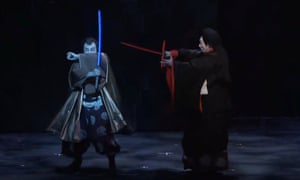
Check out the Guardian's article about the upcoming piece:
Here's the recorded stream of the show:
Tuesday, November 26, 2019
Director's Notebook Deadlines
I will be handing back your feedback in the next day or two.
FINAL DIRECTOR'S NOTEBOOK due December 6 at 6 pm. NO EXCEPTIONS!
FINAL DIRECTOR'S NOTEBOOK due December 6 at 6 pm. NO EXCEPTIONS!
Monday, November 11, 2019
Assessing DN -- Part C
Part C -- What do you notice about the C Section? How would you score it using the IB Rubric?
- Director's Notebook #1: Athol Fugard "Nongogo"
- Director's Notebook #2: John Logan "Red"
- Director's Notebook #3: Brian Clark's "Whose Life is it Anyway?"
- EXTRA: Director's Notebook #4: Lee Hall "Pitman Painters"


Thursday, October 17, 2019

Tuesday, October 15, 2019
Hw #2: Director's Notebook Part A Research
You should have selected your play for your Director's Notebook. If not, make this a priority!
Begin working on the contextual research for Section A1. (The full Section A will be due on Friday, October 27.)
Also, as you reread the script, I would encourage you to take notes of your initial thoughts and ideas about the play!

Begin working on the contextual research for Section A1. (The full Section A will be due on Friday, October 27.)
Also, as you reread the script, I would encourage you to take notes of your initial thoughts and ideas about the play!
HW Part 1: Director's Concept for Clybourne Park
-->Using the formula we used in class, write a Director's Concept (Big Idea + Intention [the message as to what the audience walks away with]). Include a list of choices as to how your concept would guide your choices.
For example:
DIRECTOR'S CONCEPT: In "The Giver", I want to emphasize how our fear of the unknown allows us to relinquish our individuality and freedom.
STYLISTIC CHOICES: I will show this through the contrast between "sameness / conformity" and individuality.
Choices:
Performance:
Color Scheme:
For example:
DIRECTOR'S CONCEPT: In "The Giver", I want to emphasize how our fear of the unknown allows us to relinquish our individuality and freedom.
STYLISTIC CHOICES: I will show this through the contrast between "sameness / conformity" and individuality.
Choices:
Performance:
- Greetings -- All put up hand as leave & exit
- Apology
- Rituals (dinner) -- Synchronized movements
- Audience in arena staging -- all together
- Audience wears arm bands with logo
Color Scheme:
- Color vs. White/Grayscale
Costumes:
- White color, logo throughout
Props:
- All branded with the logo; devoid of color
- Drone
- Apple (without color)
- Books (changing from no color to with color)
Lights/Projections:
- Security footage throughout
- Color vs. No color
- Bright almost clinical vs. warm, colorful
Sound:
- Lack of music
- Sound of drone passing overhead
- Bells, tones that signal something
- Live music at the end of the performance
Director's Concepts Guiding Director's Choices
Example of Director's Choices in "Another Brick in the Wall"
Color Scheme: Red, Black and White
1. Strong colors chosen to show the strength of quick judgment, which is not often deeply analyzed, simply black and white.
2. Red is a passionate color and will read as such. It also is the color often associated with bricks.
3. COSTUME CHOICE: All cast members (except factory workers & crew members) will be dressed in variations of black, white and red.)
4. COSTUME CHOICE: Main character who breaks the pattern of judgment is NOT in black at the end of the show, like the others, but rather red.
5. COSTUME CHOICE: Factory workers (and crew members) must be distinguished as a separate group from the rest of the play. Their pieces are transition moments and times for the audience to evaluate what happened (Read: Brecht). They wear blue to contrast the red. Also, many manual laborers in Senegal wear these blue jumpsuits, so the audience will read them as such.
6. SET CHOICE: Sets and wall pieces are painted in these colors
Use of Wall/Brick Imagery
1) SET CHOICE: Huge wall will be built by factory workers/crew members each time a moment of judgment occurs. Eventually the wall will cover the whole front of the stage, blocking actors' pathway.
2) SET/ACTING CHOICE:At the end of the show, the actors will break out of their character and speak directly to the audience, knocking down the wall. They will declare that they are sick of the judgment.
3) SET CHOICE:Set will be a mix of different pieces of wall pieced together. It should not be one full wall. It should be pieced together with different types of wall (ie different pieces of judgment)
4) SOUND CHOICE:"Another Brick in the Wall" by Pink Floyd will be used for transitions to reiterate the idea of the wall of judgment growing and the passing of time.
Use of Factory to Represent Society
1) SET/ACTING CHOICE: To compliment the scenes of the baby-making factory, the Factory Workers will be omnipresent, overseeing what we do and influencing choices.
2) COSTUME CHOICE: Factory workers will be dressed differently (blue, see previous comment)
3) SET CHOICE:Factory will be on the 2nd floor, in shadows
4) ACTING CHOICE: Factory workers will enter after each scene to "clean up" from what occurred.
5) ACTING CHOICE: Factory workers will move mechanically throughout the play, which will further distinguish their differences from the others.
Thursday, October 10, 2019
Understanding a Director's Concept
A Director's Concept is the guiding statement that the director uses to guide the production. The director must take into account what CONCEPTS s/he wants to highlight through the use of stylistic devices throughout the show.
To create a DIRECTOR'S CONCEPT you must think about your BIG IDEAS & INTENTION (What you want to say about that big idea). What do you want to emphasize in this piece? After this, you need to think about what CHOICES you can make to make your intention clear.
Director's Concept:
1) BIG IDEA
2) INTENTION (WHAT)
3) Directorial Choices (HOW)
For example...
 |
| Seedfolks, courtesy of Susan Butler |
 | |
|
In Shrek, I wanted to emphasize what makes us different, makes us stronger. I chose to use contrast of organic lines and bright colors to contrast strong linear images and artificial, plastic materials.
In Shuddersome, I wanted to create a strong mood that heighten the audiences' awareness of the senses through use Day of the Dead imagery, light/shadow, sound and color choice.
In Another Brick in the Wall, I wanted to show that we build up walls when we judge people without knowing them fully, which is emphasized through the use of wall/brick imagery and a distinct color scheme of red, white and black, which was integrated into set and costume design.
 |
| Duloc Dancers & Lord Farquaad, Shrek |
In Shuddersome, I wanted to create a strong mood that heighten the audiences' awareness of the senses through use Day of the Dead imagery, light/shadow, sound and color choice.
 |
| Shuddersome, 2015, Courtesy of Emily Grimes |
 |
| Use of Black & Red to unify--Shuddersome, 2015, courtesy of Emily Grimes |
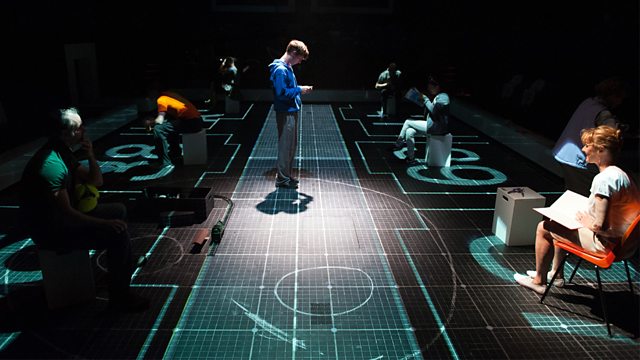
In A Curious Incident of the Dog in the Night-Time, Marianne Elliott wanted to show how Christopher's autism affects their perception of the world, which was emphasized through grids and linear imagery and gray-scale color scheme. Christopher’s discomfort was emphasized through harsh lighting, sound and movement.
 | |
 |
| Curious Incident of the Dog in the Nighttime, courtesy of ayoungertheatre.com |
 |
| Rehearsal--Breaking the Wall--Courtesy of Emily Grimes |


Monday, October 7, 2019
Understanding Context in the Director's Notebook
Remember you will have up to 20 pages for the Director's Notebook! (Usually the Context is about 2-4 pages)
Theatre in Context Requirements (from IB Theatre Guide)
• Each student carries out research into the cultural context from which the play originates and/or
research into the play text’s theoretical context, focusing on its style, form, practice or genre.
• Each student identifies the key ideas presented by the playwright in the entire play (such as intended
meanings, motifs, themes or throughline). As the author(s) of the text, the playwright might be one
person, more than one person or in some cases a theatre company.
• Each student documents this in their theatre journal.
Rubric for Part A

Examples Read ONLY Part 1 for each of the sections
Individual Time: Read Part 1 of the Director's Notebook. When you are finished jot your thoughts down on a post-it and post on the large sheet of chart paper. (15 mins each)
Group Share: (5-10 minutes)
Discuss your individual answers to the questions.
Individual Work: Create a Director's Notebook Part A for Clybourne Park (due Sunday at 6:00 pm). This should build upon the work you have already done. Remember that it does NOT have to be an essay, but it must address the requirements per the rubric!
Scores for the Samples:
1 (7-8)
2 (1-2)
3 (5-6)
4 (7-8)
Theatre in Context Requirements (from IB Theatre Guide)
• Each student carries out research into the cultural context from which the play originates and/or
research into the play text’s theoretical context, focusing on its style, form, practice or genre.
• Each student identifies the key ideas presented by the playwright in the entire play (such as intended
meanings, motifs, themes or throughline). As the author(s) of the text, the playwright might be one
person, more than one person or in some cases a theatre company.
• Each student documents this in their theatre journal.
Rubric for Part A
Examples Read ONLY Part 1 for each of the sections
- Director's Notebook #1: Athol Fugard "Nongogo"
- Director's Notebook #2: John Logan "Red"
- Director's Notebook #3: Brian Clark's "Whose Life is it Anyway?"
- EXTRA: Director's Notebook #4: Lee Hall "Pitman Painters"
Individual Time: Read Part 1 of the Director's Notebook. When you are finished jot your thoughts down on a post-it and post on the large sheet of chart paper. (15 mins each)
- General noticings or realizations
- Questions -- What wonderings did you have while you were reading?
- Strengths -- What is strong and clear?
- Weaknesses-- What needs work?
- Takaways -- What can you use that this person put in his/her work?
Group Share: (5-10 minutes)
Discuss your individual answers to the questions.
Individual Work: Create a Director's Notebook Part A for Clybourne Park (due Sunday at 6:00 pm). This should build upon the work you have already done. Remember that it does NOT have to be an essay, but it must address the requirements per the rubric!
Scores for the Samples:
1 (7-8)
2 (1-2)
3 (5-6)
4 (7-8)
Saturday, October 5, 2019
Broadway Teacher's Group Podcasts
Thought you might find this interesting. Check out Podcasts with some of the top Broadway artists who are discussing their work. HERE'S THE LINK.


Mind Map...
For homework, complete the Mind Map with moments from both Act 1 & Act 2. Think about adding specific lines, motifs, symbols as well.


Monday, September 30, 2019
Clybourne Park: Units for Act One
HW: Please read Act Two and write the units for next class. (Post on YOUR blog with a link here.)
ACT ONE
Unit 1:
BEV packs while RUSS eats ice cream. They have a discussion about the origin of the term “Neapolitan”
Unit 2:
FRANCINE walks in and BEV offers her the chafing dish. Demonstrates power dynamic-- the boss’s guilt and the servant’s pride.
Unit 3:
JIM walks in to check in on RUSS. Their conversation escalates and RUSS gets angry at JIM.
Unit 4:
KARL and BETSY walk in. He tries to change their minds about selling their house as they all have a conversation about the implications of having a black family moving to their neighborhood.
Unit 5:
JIM and KARL ask FRANCINE and ALBERT about living in a white neighborhood
Unit 6:
RUSS bursts and silences KARL. Finally tells the story about his son’s suicide. Realize both RUSS and BEV don’t belong in their community as they’ve been shamed by this scandal..
Unit 7:
The guests leave, and BEV goes back to packing up her boxes while RUSS goes back to reading his magazine. The act ends how it started.
ACT TWO
Thursday, September 19, 2019
Clybourne Park Assignment
For Monday, September 30
Part 1: Context
Please conduct historical/cultural research on the following topics to be shared with the group. Write a blog post write up explaining the most significant elements / images. Be sure to include at least 2 citations!
"Great White Flight" in the US-- Liz
Recent Gentrification in US Urban Areas -- Xandao
Clybourne Park, Chicago in 1950's and today -- Sofia
A Raisin in the Sun/Lorraine Hansberry and Bruce Norris -- Rosanne
Part 2:
Please read ACT ONE of the show. Be sure to keep note of the important elements we discussed in class. (Attached is a template you may use/adjust. Please share your completed version for ACT 1 with Ms. Grimes!)
- *Synopsis of scenes/moments
- *Key notes about characters/characterization
- *Key themes/ big ideas
- *Key lines / moments
- *Motifs / symbols / images
- *Key design/technical elements
- *Any other notes you need as a director.
Wednesday, September 18, 2019
Peter Brook -- Living Legend's Latest Play "Why"
Read more about theatrical theorist who wrote "The Empty Space", his life work and his new production in NYC premiering this week "Why".
For Peter Brook, the Experimental Showman, ‘Nothing Is Ever Finished’
https://www.nytimes.com/2019/
For Peter Brook, the Experimental Showman, ‘Nothing Is Ever Finished’
https://www.nytimes.com/2019/
 |
| photo courtesy of: Benjamin Malapris for The New York Times |
Tuesday, September 17, 2019
Immersive Theatre
Check out an emerging style of theatre--Immersive Theatre from The American Theatre Wing.
Leave a comment below discussing what were some of the interesting ideas you learned about. Application: Think about how this style of theatre might be interesting for you (either in past or future productions). How COULD you have seen it used in past productions or in future productions?
Leave a comment below discussing what were some of the interesting ideas you learned about. Application: Think about how this style of theatre might be interesting for you (either in past or future productions). How COULD you have seen it used in past productions or in future productions?
What Director's Do
Directors...
Good Directors:
Bad Directors are:
- Are in charge of the Rehearsal Process
- Planning / Devising
- Auditioning/ Cast
- Conceptualize --coming up with the message or what you want to convey. What do you want the audience to leave with
- Interpretation
- Ultimate Decisions
- Notes -- Feedback and advice
- Vision.
- What themes are emphasized in the script?
- Big Ideas
- Creative Decisions
- Style
- Meet with directors to collaborate to s
- Acting Blocking, Characterization
- If possible, any adjustments to script
Good Directors:
- Need to be able to be open-minded (not a cookie-cutter)
- Be flexible - there are lots of hiccups, so work around it.
- Being able to convey ideas clearly
- Good communication
- Good organization
- Supportive -- be present for your team. Can't just make the decisions and just say it. You need to a team player.
- Be Responsible -- the team needs to trust you.
- Trust others. You need to trust the team.
Bad Directors are:
- Rude
- Late
- Disorganized
- Have no focus / concept
- Unsure of the story.
Research Presentation Reflection
Be sure to address the following:
Add to YOUR Google Drive AND BLOG!
*RP Presentation
*Video (Ms. G will share with you)
- Successes / Strengths
- Challenges / Weaknesses
- Advice to Yourself & Future IB Students
Add to YOUR Google Drive AND BLOG!
*RP Presentation
*Video (Ms. G will share with you)
Monday, September 9, 2019
Final RP Presentation Schedule
Please be ready (set up and in costume, with all of the props you need for your presentations!)
Wednesday, September 11 -- Block 4
1:45 - 2:00 -- Rosanne Van Ballegooijen -- Bunraku Theatre (Japan)
2: 10 - 2:25 -- Sofia Pricolo -- Kathakali Dance Theatre (India)
Friday, September 13-- Block 4
12:35 - 12: 50 -- Xandao Nascimento -- Noh Theatre (Japan)
1:00 - 1:15 -- Liz Ceballos-Rivera -- Wayang Kulit (Indonesia)
Sunday, September 8, 2019
Beauty & The Beast @ Chapel
You're Invited...


We have also been invited to attend the Dress Rehearsal on Thursday at 4:00. Please let me know if you are interested!
Top 10 Colleges Represented on Broadway
Thought you might find this interesting! Check it out the article HERE "Big 10 2019: The 10 Most Represented Colleges on Broadway".

Tuesday, September 3, 2019
D2: Comparison to another practice
It's important that you are making clear connections to the practice
NO! Commedia Dell'Arte --> Noh Theatre (This is too broad and won't allow you show depth of understanding)
YES!! Use of masks in Commedia dell'Arte --> Use of masks in Noh Theatre
__________________________________________________________________________
What to address in your slides:
NO! Commedia Dell'Arte --> Noh Theatre (This is too broad and won't allow you show depth of understanding)
YES!! Use of masks in Commedia dell'Arte --> Use of masks in Noh Theatre
__________________________________________________________________________
What to address in your slides:
- What is the practice you can compare this convention to?
- Give a bit of background (context) into the practice you are comparing your convention to. You may want to address how you know about this practice (showing your personal connection to a variety of theatrical experiences.)
- Why is the connection between YOUR convention and this practice a valid one?
- How is YOUR convention similar to the practice?
- How is YOUR convention different to the practice?
Subscribe to:
Posts (Atom)