Thursday, April 11, 2019

Year Ones: Costume Design

Please create a costume for one of the caucus race characters. The actors who still need to be costumed are:

  • Vinicius
  • Sebastian
  • Emma
  • Fia
  • Gabi Steagall?? (Is she really a caucus animal?)
  • Knave of Hears (Sofia, I would like to see how you imagine your costume. I imagine your will just be a sketch and not on the hanger.)

The clothes you pulled last class is in my office. You CAN use these, as long as you make sure to put all items back in my office and LOCK THE DOOR!!  (Please ask Mr. Borges or Mr. Faria for the key. I give you--and only you--permission to be there.)

Each person should come up with ine finished look. please send me a picture of the final piece--realized or drawn!!

Year 2: Pecha Kucha Reflection Presentation

For your final summative for the class, I ask that you take time to create a five minute presentation in which you reflect on how you have grown as a theatre practitioner, a learner and individual the past two years. Over the next few days in class, you will prepare and get ready to present. The presentation will be on Wednesday, April 18 in class.

Format: Revamped- Pecha Kucha style presentation

Time Limit: 5 minutes long - 10 slides that play for 30 seconds each 

As you will only have 5 minutes to cover two years, be aware that you will not be able to hit everything we did. You will need to pick and choose accordingly.

I'm really sorry that I'm not there to walk you through this exercise, as I wanted to share the experience with you. 

Today's Exercises in Class: 

Part One: What is a Pecha Kucha? 
Pick one of the Pecha Kucha to watch and understand the formatting. Ms. Grimes will answer any questions via email or next class. 

Part Two: Reflecting on Two Years (Please do this in your Journal & send me photos of your work from today!) 

1) Timeline -- Using your blog, journal and memories, look back to all of the projects we have done over the past two years. Create a timeline outlining everything.

2) Draw a emotional line around the timeline that represents your thoughts and feelings about each of the experiences you had in this class. (Remember we made a line that we acted out at the start of the year? This is a similar item. Think about how the quality of the line shows your experience with that project.)

3) Next to each activity, write down a 5-6 words, phrases or images that come to mind when you think back on that experience.

4) Label the following & explain your reasoning.

Which activity...
... was the most interesting for you?
...was the most challenging?
...did you enjoy the most?
...did you learn the most from? 
... pushed you the most out of your comfort zone.?
...are you proudest of?

5) Compare and Contrast:
The YOU of August 2017 & April 2019
How have you changed? developed? transformed?
How have you grown as a...

  • Designer?
  • Creator?
  • Performer? 
  • Director?
6) Begin thinking about how you can organize your presentation for next class! Think about the big themes that came up repeatedly for you and how you can organize and showcase this!


Please send a screenshot of your work to Ms. G
____________________________________________________

Presentation Rubric

7- Deep, detailed and thoughtful piece that demonstrates an insightful reflection on all areas. Extremely well prepared & thought out. Ideas & speech are extremely well understood and easy to follow.

6 - Detailed and thoughtful piece that demonstrates a strong, meaningful reflection on all areas. Very well prepared & thought out. Ideas & speech are well understood and easy to follow.

5- Detailed and thoughtful piece that demonstrates a meaningful reflection on most areas. Well prepared & thought out. Ideas & speech are understood and easy to follow.

4 - Thoughtful and somewhat detailed piece that demonstrates a reflection on many of areas. Mostly prepared & thought out. Ideas & speech are mostly understood and somewhat easy to follow.

3 - Somewhat thoughtful piece that demonstrates a reflection on many areas, although may leave out large sections. Somewhat prepared & thought out. Ideas & speech are somewhat understood but may not be clear at all times.

2 - Somewhat simplistic and basic piece that demonstrates a reflection on just a few areas; many questions are left unanswered. Not well prepared or thought out. Ideas & speech are not fully understood but may be quite unclear or confusing.

1 - Extremely simplistic and basic piece that hardly demonstrates reflection on the categories; most questions are left unanswered. Not prepared or thought out. Ideas & speech are incorrect, confusing or misleading.

Thursday, April 4, 2019

Set Design Reflection

On your blog, take some time to reflect on the process of designing and (beginning to) realize the design.

What to include: 

  • What did you learn / realize about the design process through working on "Alice in Wonderland"? 
  • What were some of the frustrations/struggles did you encounter throughout the design process? How were you able to problem solve that? 
  • How did your initial design transform to the final design? To what extent are you satisfied with the final design(s)? Elaborate.
  • What insights or realizations did you have about set /costume designs?  How does this experience help you look back on previous productions you've been part of and see with different eyes? 
  • How will those realizations be applied to your future theatre work?


Be sure to include images with your reflection.
Post the link as a comment here.

Ms. Grimes' Initial Sketch of Scene 3: Caucus Race


Saturday, March 23, 2019

Final Set Design -- Alice


Hall of Doors in Progress -- Alice in Wonderland
Image courtesy of: Captial Scenic Inc. (capitalscenic.com)

Completed Hall of Doors (with Final Set Design Sketch) -- Alice in Wonderland
Image courtesy of: Captial Scenic Inc. (capitalscenic.com) 
TASK: Create a detailed set design for one of the scenes from our production of Alice in Wonderland. This should incorporate the decisions we have already made, but create a detailed vision for the scene. You should incorporate visual research (inspiring images) along with captions which explain how to create, use or move the major pieces.

The Goal of this exercise: 
--Create visual designs with detail and clarity
--Use visual imagery and written work to explain & justify your ideas, concepts and choices.
--Use inspirational images (Visual Research) to support your own work
--Identify design elements in your choices
--Visualize how to create, move and use elements of a scene

Scenes: 
  • Caterpillar - Liz
  • Mad Tea Party - Rosanne
  • Cheshire Cat - Xandao
  • Painting the Roses Red -- Sofia 
  • Queen of Hearts - Camila 
RUBRIC:
Exemplary (7)
   --A complete detailed and colored image of the scene that looks exactly as the designer would like the scene to be.
   --May include multiple designs to explain how the scene changes/ develops
   --A variety of visual research is added to demonstrate an element of the design
  -- Visual research identifies the design element (color, texture, line, shape, pattern) and how this would be incorporated in the final design
  -- Clearly & thoughtfully justifies the choice of each major item
  -- Clearly articulates how elements in the design function, move or transform throughout the piece.

Meeting (6 / 5)
   --A detailed and colored image of the scene that looks mostly as the designer would like the scene to be.
   --May include less developed sketches to explain how the scene changes/ develops
   --Visual research is added to demonstrate an element of the design
  -- Visual research attempts to identify the design element (color, texture, line, shape, pattern) and how this would be incorporated in the final design
  -- Clearly articulates the choice of each major item
  -- Articulates how elements in the design function, move or transform throughout the piece.

Progressing (4 / 3)
   --A basic image with some details and/or colors. It demonstrates what the designer would like, but it does lacks clarity.
  -- Does not include additional sketches to show changes/development in the scene
   --Limited visual research is superficially added added to demonstrate an element of the design
  -- Writing on the visual research is simplistic
  -- Simple justification for the choices
  -- Simplistic explanation of how the design functions, moves or transforms throughout the piece.

Below Expectations (2)
  --A rudimentary sketch with very little detail and/or color. Lacks clarity.
  -- Does not include additional sketches to show changes/development in the scene
   --No visual research whatsover
  -- No written explanation of the choices made
  -- Choices are confusing or do not match the director's concept.

Incomplete (1) 


Monday, March 11, 2019

Year 2: Solo Project Report Review

Solo Project Expectations (from IB Course Syllabus):
HL Students will present a solo piece of theatre (8 minute maximum) in which a theatrical theory is applied practically. Along with a unedited copy of the film, students must submit a 3,000 word (maximum) report that will discusses your directorial choices along with how you have applied the theory in detail. It will also reflect on to what extent you have understood and achieved the theory.

The video you provide will be used to see if your theatre piece matches your report's discussion.

IN CLASS:
Today, you will need to take time to review both the rubric, sample reports  and your own Solo Project report.

Link to assignment. (Make a copy, fill in with your notes & share with Ms. G.) 

Important Links:
Don't forget that your Solo Project is worth 35% of your final IB Theatre grade! Here is the LINK to the updated Solo Project Rubric. It is ESSENTIAL that you use this as a guide for the report! 

Eliza's Solo Project Report LINK
Student Report: Robert Lepage

Other Solo Project Samples (from the IB): 

Sunday, March 10, 2019

Set Design -- Behind the Scenes of "Wicked"

Check out what kind of thoughts went into the design of "Wicked".


Set Design -- American Theatre Wing


Follow the journey of Tony and Obie Award Winner Beowulf Boritt and Obie and Hewes Design Award winner Mimi Lien as they explore the process of a Scenic Designer. Find out how they got started, what it takes to work in this profession, and how the scenic design is informed through collaboration with many other key members of the theater. For more information on Beowulf Boritt: http://www.beowulfborittdesign.com/ http://www.ibdb.com/person.php?id=392865 For more information on Mimi Lien: http://www.mimilien.com/ http://www.broadwayworld.com/people/M...


Set Design Practicalities

Here is a great chapter on the practicalities of set design from Technical Theatre for Non-Technical People by Drew Campbell.

Link to The Tools of Scenery: Surface, Texture & Tricks

  • A Place to Stand: Platforms / Steps (pg. 31-35)
  • A Surface to Look at: Paint/Fabric (pg. 35-46)
  • Real Things: Doors/Windows/Etc (pg. 46-48)
  • Moving Stuff Around (pg. 49-60)
  • Playing with the Audience: Special FX (pg. 60-69)


Monday, March 4, 2019

Year 2 Final Deadlines

Monday, Feb. 25 -- Draft of Solo Project Report Due

Monday, Feb. 25-Friday, March 1 -- Meeting with Ms. Grimes to review expectations for Solo Project Report

Friday, March 1 -- Extended Deadline for Solo Project Report. Final Date to receive feedback from Ms. G

Monday, March 11 -- Feedback from Ms. G returned. Peer Feedback on Parts A & B

Wednesday, March 13 -- Peer Feedback on Parts C & D

Friday, March 15 - Final Solo Project Report Due & Sent to IB (No extensions)

Thursday, February 28, 2019

Carnaval Homework -- Inspiration Board!

1) READING: 
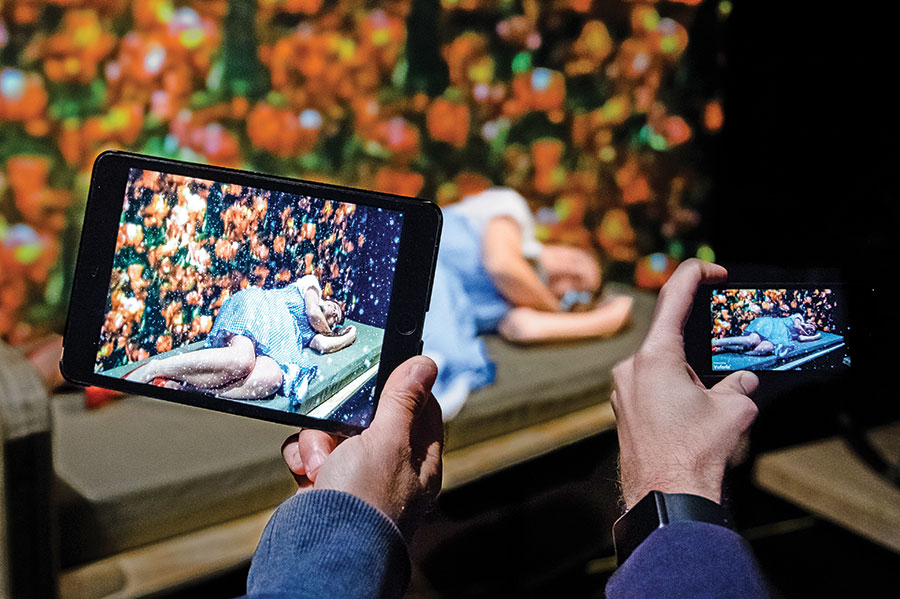
Please read the article from American Theatre "6 Shows That Perfectly Combine Tech and Text", regarding technology in Theatre. Write a comment below reacting to the article and about how you could envision using tech in Alice in Wonderland.
Courtesy of: americantheatre.org
2) FOCUS YOUR WORK: 
  --Review the requirements of the script. HERE is the link to our shared doc.
  --Remember the Director's Vision: 
In Wonderland, the impossible is possible.

3) INSPIRATION BOARD: 
Create an inspiration board by finding 15-20 images that you find inspiring for the show. Leave space for writing about each image! 

(Try to vary these so that you're thinking about the different SET requirements.)  I would like to put these on the boards, so please make a physical board. Cami, if you can send your Slide show BEFORE Monday, March 11, that would be helpful!) 

Here is an example of a Inspiration Board that I made a LONG time ago for the Queen of Hearts' Chambers. I do NOT think that this board would be appropriate for this version of Alice, but I wanted to make sure you had a clear example of what I was looking for: 
Example of Visual Research Poster - From a dark version of Alice in Wonderland -- The Queen of Heart's Chambers
Emily Grimes
Above is an example of the Visual Research I used previously. It is not perfect, as it is missing the element of explaining how the design element might be used in your design. Notice that I was looking at several elements--hearts, columns, windows, etc. Be sure to include lots of elements in your design!

Monday, February 25, 2019

IB Theatre Showcase Videos

Congratulations on an incredible showcase! Here is the link to the videos for your different performances! (Thanks Aleandro!!)

Final IB Theatre Showcase Bow
courtesy of: Fanny Guimaraes

Commedia Summative

For your final write up, I would like you to do a condensed version of the Research Presentation, in written form. You must include sources, a works cited page, along with images (historical as well as your own.)

Part A1 & A2 -- Theatre in Context: Using a wide range of sources (at least 3), explain the context of Commedia dell'Arte and the specific conventions of the character you chose to research.  Explain your interest in the character. (You are expected to use quotes, paraphrasing along with images to back up your work.)

Part B1 --Theatre in Practice: Experimenting with this Character -- How did you try out the character? What did you notice about working with the character? What worked and what did not?

Part B2 -- Theatre in Performance-- Discuss how you integrated the character in the final performance. How did you apply the conventions of the character to the performance? How did you choose to integrate the character into your piece. (If you switched characters, you should explain WHY you did so.)

Part D1 -- Evaluation and Reflection --After viewing your piece(s), what do you think was successful and what needed work? What are the major take-aways for you as a theatre practitioner? How will this work aid you in future performances?

You will be assessed using the IB Theatre rubric, using the criteria that applies to the write-up above. Here's the rubric (A, B & D1).

Page Limit : 5 pages, excluding works cited page
Double Spaced
Due: Thursday, February 28 (at the start of class) 

Monday, February 11, 2019

Year 2 in Class Expectations

As a Group (30 minutes) 
*Name of Each Show
*Advertising & Invitations
*Social Media
*Posters
*Order of Show
*Finalized BBT Set up (including # of risers / audience members expected)
*Who is running lights? Sound? Projections? (Ensure availability for Dress, Tech & Final Performances)

Individually:
*BBT Set Up for your show (Sketch)
*Lighting Plot Completed
*SPIKE the area for lighting & set pieces
*Materials List -- How will you take care of them?

Once you have completed the above items, you may work on:
*Rehearsal with your mentor
*Working on completing / finding your technical/design elements
*Writing up you intentions and the choices you have made to justify that intention

Next Class
*Intentions Written Up
*Designs Completed, including lighting plot


Commedia dell'Arte Resource

Here is a link to Commedia dell'Arte: An Actor's Handbook.  (Download and flip to see the pages right-side up.)

Find 3 resources to research your character fully. Each of you should research your character in order to create a bit of lazzi for this character, which will be further developed in your scenes for next week.

Writing: A concise character description and context. What are the conventions of your character? How can you explore this character? What did you try and what realizations did you have? Be prepared to bring a short improvised scene to the group.

Possible Characters:

  • Magnifico
  • Pantelone
  • The Doctor
  • Brighella
  • Capitain
  • Harelquino
  • Zanni

Wednesday, February 6, 2019

Year 2 Expectations


  1. Learning Targets Plan (completed with dates filled in) -- Turned in today or tomorrow at the latest
  2. Stage Set Up Plan -- Come with a sketch and a plan for your performance. Be ready to discuss and negotiate what the set up for the plan is. 
  3. Theorists Exercises -- Come with the exercises that you can try out from your next class. 

Commedia -- Getting to know the Stock Characters

For homework, watch the remainder of the video below. (We left off on 5:35, I believe.) After you are done, please write a blog post and share the link below in which you identify the MODERN, pop culture examples of each character. Please include either an image or video to support your choice!

Thursday, January 31, 2019

Year 2 Work

Scripts are already due! Please send Ms. Grimes your draft!

On Monday, you will need to have PART A of your research completed.

At the moment, these are the theorists that i have for you. Please let me know if this has changed:

  • Isa - Artaud (Acting style)
  • Jenny - Meyerhold (use of physical theatre)
  • Sofia O - Brecht (alienation -- use of projections?)
  • Chloe - Theatre of the Absurd / Albert Camus (aspect?)
  • Maria Eugenia - Viola Spolin? Improvisation as devising?

Wednesday, January 30, 2019

Starting Anew...

Year 2:
-Review of Solo Projects Samples
-What I notice / Questions
-Learning Targets Plan (LINK to Digital Copy)
-Completion of script draft

Year 1: 
-History of Commedia dell'Arte

-Stock Characters -- What are they? Why do so many forms use them? What advantages do you have when you use stock characters? What are some dangers?
-Experimentation: What do they look like? Sounds like?
-Improvisation:
-Scenario


Thursday, January 24, 2019

Long Weekend Work

Next Class -- Final Research Presentations! 

Long Weekend Homework:
Year 1 & .5: Find a musical that you are NOT familiar with and research it. Be ready to present the basic storyline of the show, along with a clip from one of the important moments or songs.

Year 2: 
*Finish revisions on your RP with feedback from peers and Ms. G

*Plan calendar for Solo Project (Link here)

*Begin the following:

  1. Writing your script! 
    • Script Written & Completed - Monday, Feb. 4 
  1. Research using a "range of appropriate & relevant sources" answering the questions. Must include at least 4 quotations or in text citations. 
    • Part A - Due Thursday, January 31


  • What is the theory? 
  • What are the aspects/conventions of the theory? 
  • What was the context of the theorist and theory? 
  • What are the ways to explore this theory (think practical exercises that you will use!) 


Monday, December 17, 2018

Holiday Work

Don't forget to go see a show!! Watch as much live theatre (or Digital Theatre Plus) as possible! 

Year 1 

  • COMPETITION!! Watch as many shows as you can (and jot down/sketch what is inspirational about them). Minimum one play! Be ready to talk about it!  
  • Read as many plays as you can. Minimum one play & play review (LINKED HERE). 
  • Bonus: Try to find ONE inspirational image each day and add to an Inspirational Notebook --real or online. (This can be for you to draw upon as you move forward with directing and designing your own work!) 
Year 2
  • Complete your RP before the end of 2018!
  • Begin planning your Solo Project (see proposal below). Here is a helpful link for understanding the Solo Project and the requirements.
  • Select a theorist that you are interested in researching and exploring. Choose your theorist & aspect of theatre to explore.
    • Research and blog about five (5) different theorists.

    • Resources: 
Solo Project Proposal (Due Jan. 22 in class) 

  • What is your plan for the project? 
  • What are the main themes you will address in your piece? 
  • Will you write your own script or use an existing piece? If you use a published piece, what are the royalty costs? 
  • Why is this piece meaningful for you? Why do you want to put this piece on? 
  • What are you most excited to do in this piece?
  • What are some of the issues you foresee with the piece? How will you problem-solve before it becomes an issue? 
  • What type of theory are you most interested in exploring? 
  • Who is the theorist you want to explore? 

Important & Non-negotiable dates: 
Over the December/January holiday, you must complete your RP and prepare for your Solo Project! 

January 22 -- Final RP Slideshow Completed; Theorist Selected & Solo Project Proposal Due 
January 24 -- Mock Presentation with Year 2s
January 28 -- Final Presentations (no exceptions)
January 28-February 21 -- Solo Project Completion / Rehearsal
February 22 -- Final Solo Project Performance

Wednesday, December 12, 2018

Year 1 Expectations

For next class, you should complete the following: 

1) Final Play Review
2) Analyzing moments of TEAM in Baalzebub 
--BLOG POST & linked here (include images -- photos or sketches)
       a) 2 moments of TEAM
       b) 1 moment of how YOU would have created a moment of TEAM (can be significantly altering a moment that we had OR finding a completely different moment). 

What information needs to be included in the TEAM Analysis? 
--Description (Set the stage and explain the context of the scene. Explain what theatrical elements were used to create Tension, Emotion, Atmosphere or Meaning.)
--Personal Reaction (what effect did this have on you or audience members?)
--Analysis (Explain how this scene was significant for adding to the audience's understanding of the character(s) or story.) 

7- Deep, detailed and thoughtful piece that demonstrates an insightful reflection on all areas.
6 - Detailed and thoughtful piece that demonstrates a strong, meaningful reflection on all areas.
5- Detailed and thoughtful piece that demonstrates a meaningful reflection on most areas.
4 - Thoughtful and somewhat detailed piece that demonstrates a reflection on many areas.
3 - Somewhat thoughtful piece that demonstrates a reflection on many areas, although may leave out large sections.
2 - Somewhat simplistic and basic piece that demonstrates a reflection on just a few areas; many questions are left unanswered.
1 - Extremely simplistic and basic piece that hardly demonstrates reflection on the categories; most questions are left unanswered.

Revised Year 2 Expectations -- REMINDER

December 14: Summative 
12 Minute Workshop on Theatrical Tradition / Convention which includes the following: 
  • Slideshow
  • Part A (Research on Historical/Cultural Context of Tradition)
  • Teaching of the Convention
  • Include your preliminary exploration / reflection
  • Preliminary Reflection
  • Works & Images Cited Page
The relevant sections of the IB rubric will be used to evaluate your work. 


Not included: 
  • Full Exploration
  • MOT
  • Comparison to Other Theatrical Experience
  • Complete Reflection
Non-negotiable dates: 
Over the December/January holiday, you must complete your RP and prepare for your Solo Project! 

January 22 -- Final RP Slideshow Completed ; Theorist Selected & Solo Project Proposal Due 
January 24 -- Mock Presentation with Year 2s
January 28 -- Final Presentations (no exceptions)
January 28-February 21 -- Solo Project Completion / Rehearsal
February 22 -- Final Solo Project Performance

Revised calendar


Baalzebub!

Congratulations to a fabulous show! People were impressed with the high quality performance. I'm proud of how you all came together as a team and really put on a powerful show. Bravo!!


Production Rubric:
Please complete for your role in Baalzebub & share with Ms. Grimes.

Monday, November 26, 2018

Research Presentation Overview

Today we will build our understanding of:
*What are the expectations are for the Research Presentation?
*What makes a great RP?
*What is the timeline for completing the RP?

1) Sketch a touring show of a play performed in your Theatrical Tradition with the Convention you researched.  Label key elements!

2) Citing information:
What needs a citation?
When do you paraphrase or use a direct quote?

3) Paraphrasing (12 mins)
Year 2: Research Presentation IB Rubric
What do you need to do in Part A, B, C, D?

Year 1: Show Share Out

4) Share Out IB RP Expectations

5) What Makes a Great RP? Eliza's Kathakali Mudras RP
In your journal, make note of:

  • I noticed/realized...
  • I wondered...
  • My take-away. I should...
6) Timeline: Calendar of Research Presentation Deadlines (Click tabs for Yr. 1 & 2)

Homework:
 Year 2: 

1) Personal Assessment of Part A
Make a copy of the Research Presentation IB Rubric
--Rename it to include YOUR name
--Share with Ms. Grimes
--Self-Assess your Part A (completing the blue part at the end of the section)

2) Finish your convention research, so that you have the slide to begin exploration next class! 


Year 1: Understanding Commedia a bit better
For your final presentation will be a short 5-8 minute presentation on Commedia and one of the stock characters that you explored. You will present a moment of improvised Commedia together. 

1) Getting to Understand Commedia a Little Better. 
--Watch the following pieces & take notes
-- Compose a slide show with 1-3 slides on the Historical Context of  Commedia Dell'Arte (keep a copy of your sources!)
Commedia dell'Arte and the Roots of Slapstick (KPBS.org)
Commedia dell'Arte: A Historical Overview (The National Theatre)

-- Optional: Find another source for your research about the Historical context of Commedia


Tuesday, November 13, 2018

RP Online Resources

This website is an incredible resource for you as you undertake the Research Presentation! Be sure to click on the links at the top to find a variety of different resources!

LINK to West Sound Academy RP Prep Page (include exemplars!)

Theatre Traditions HW

Theatre Traditions Slide-Show Template

Break Homework:

Year 1: 
  1. Complete the Theatre Traditions Slide Show & link to your Online Journal
  2. Watch at least 15 minutes of a traditional performance & reflect upon the show (on your blog)
  3. Watch at least one show (live or on Digital Theatre Plus) & complete the Play Review. Be prepared to present when we return! 
Year 2: 
After you have chosen your theatre tradition, you must begin your research. In addition to finding reliable sources -- at least five (5) reliable sources (one of which must be a book/online journal)--you need to research the particular convention. 

Research:  
Part A of the RP: Create a preliminary slide show with the following information. Notes should be included below! 
*Cultural and/or theoretical context, including: (place, time, explanation of the theatrical tradition, how it developed and its significance)
*Definition of particular convention
*Particular ways that actors train (including exercises) 
*Illustration for each slide 
*Direct quotes 
*List of Sources 

Viewing: Watch at least 15 minutes of a traditional performance & reflect upon the show (on your blog)


All work is due before class on November 26. 

Friday, November 9, 2018

Preliminary Theatre Tradition Research

Looking ahead, it's important we start thinking about our next big project--The Research Presentation!

Remember that for this task you must choose a tradition NOT PREVIOUSLY STUDIED and partake independent research on that tradition.

You should select a tradition that is exciting for you, as you will need to teach and act with the convention of that tradition. In addition, you must apply it to a piece of text and act it out. The possible traditions are:


Year 2: To prepare for Tuesday's class, please select five (5) unfamiliar traditions from the list above to do some preliminary research on. This means, watching a video, finding an informative website or perusing a book. On your blog, you should write a short response such as this: 

Tradition #1: Bunraku Theatre 

Reaction: As I watched the video, I was intrigued by the puppets and how much training it takes to become a puppeteer. I thought it was interesting how the puppets have a spiritual connection with Shinto and would like to know more about how the puppets "come to life".  If I chose this as a tradition, I imagine that I would need to make a puppet and work on manipulating it. As I haven't done much puppetry work, I think this would be an interesting challenge. 

Source: NHK (Japan's National TV) short documentary on Bunraku LINK

Year 1: To prepare for Tuesday's class, please select two (2) unfamiliar traditions to do some preliminary research on. This means, watching a video, finding an informative website or perusing a book. See above for the example! 

Wednesday, November 7, 2018

RIP Ntozake Shange

Ntozake Shange, Who Wrote ‘For Colored Girls,’ Is Dead at 70


Image
Ntozake Shange, right, with Janet League in her play “For Colored Girls Who Have Considered Suicide/When the Rainbow Is Enuf,” which was nominated for a Tony Award in 1977. Bettmann/Getty ImagesCreditCredi
Read the full Ntozake Shange Obituary from NY Times

Know a bit more about the Choreopoem "For Colored Girls Who Have Considered Suicide / When the Rainbow is Enuf":
Image result for for colored girls who have considered playbill
Enotes Summary of the Play

Boston Globe Article on the recent production of the play

Sacramento State Recent Production of "For Colored Girls Who Have Considered Suicide When the Rainbow in Enuf"


Sorry Monologue (from For Colored Girls Film)

Wednesday, October 31, 2018

Works Cited Pages & MLA Style

It's imperative that you cite all the sources you used in your work, whether it's a video, a quote or image! We are an MLA style school, so it's important that you use MLA style in your work.

Here are some resources to help with creating a properly formatted:

MLA Works Cited (A Quick Guide) 

OWL Purdue Writing Center (Sample Works Cited Page)

EasyBib (YOU MUST CHANGE FORMATTING!)

Hints:

  • I would encourage you to have a separate Works Cited Page & Images Cited Page. 
  • Citations do NOT count in word count or in the page limit
  • Make sure you follow the OPPOSITE formatting of a regular paper: 
FIRST LINE SHOULD BE FLUSH LEFT JUSTIFIED AND THE FOLLOWING LINES
     SHOULD  BE INDENTED. NO MATTER IF THEY ARE JUST ONE LINE OR TWO OR
     THREE OR FOUR OR FIVE.