- Director's Concept / Intention: Please add the specific choices that you will make in your script to achieve your intention
- List of all technical needs you have for your script!
- (As a group) -- Decide on the Stage Design/Set Up --including where the audience is
Friday, May 17, 2019
Homework

Wednesday, May 15, 2019
Intention Statement / Director's Concept
For next class, please write an intention statement / director's concept for your piece.
For example:
In my piece, I hope to surprise the audience and force them to interact with a difficult situation by implementing Augusto Boal's theory of Invisible Theatre at a subway station.
Director's Alive -- Mock Solo Project
For the Report, we will be using the Solo Project Rubric. This is your final summative for the semester.
Link to the Solo Project Rubric.
(You will not be graded for B2 or the audience talk-back element of D1)
For more detailed information, please see the Solo Project Section in the IB Theatre Guide (pg. 33-44).
Maximum 3000 words. Due June 1 at noon to Ms. Grimes. No late work accepted!
Here is a breakdown of the different elements for the report:
Part One:
Theatre in Context: The context of the theorist and selected aspect(s) of the theory
--Explains the context of:
--Uses a wide range of appropriate sources (including primary sources)
Tip: Be sure to use the theorist's own words AND analyze these!
Avoid frivolous details that don't tell us anything about the theorist's theory and work in theatre!
In past work, some of the keen students have spent too much time on their research. If this applies to you, be aware to not overdo this section! Make sure you detail the theory, but leave yourself room for going into detail about YOUR work.
Part Two:
Theatre in Process: Practical Exploration(s) of the aspect(s) of theory and the development of the piece (Omitting B2--use of feedback)
--Explains:
Tip: Be sure to include photos and specific reflections. If you didn't get the photos at first, ask your actors to recreate the moment!
Part Three: Presenting Theatre: Theatre Theory in Practice
(This will evaluated in your performance!)
Make sure your piece shows...
--Application of the theory in your piece
--Your intention comes across clearly in the piece
--Strong use of performance & production elements
Part Four: Presenting Theatre: Evaluation of the Piece and Reflections
(Omitting part of D1 in regards to the audience talkback)
Tip: Be very specific about the moments where you applied the theory. Include photos and explain how those photos relate to the theory!
Don't throw away the reflection! Make sure you have specific take-aways that can be applied to your future work!
Link to the Solo Project Rubric.
(You will not be graded for B2 or the audience talk-back element of D1)
For more detailed information, please see the Solo Project Section in the IB Theatre Guide (pg. 33-44).
Maximum 3000 words. Due June 1 at noon to Ms. Grimes. No late work accepted!
Here is a breakdown of the different elements for the report:
Part One:
Theatre in Context: The context of the theorist and selected aspect(s) of the theory
--Explains the context of:
- The theatrical world that the theorist lived in
- The Theorist's life as is relevant to his/her theatrical theory and experience
- The theorists beliefs about theatre
- The theory
- How the theorist applied the theory to his/her work (including examples)
--Uses a wide range of appropriate sources (including primary sources)
Tip: Be sure to use the theorist's own words AND analyze these!
Avoid frivolous details that don't tell us anything about the theorist's theory and work in theatre!
In past work, some of the keen students have spent too much time on their research. If this applies to you, be aware to not overdo this section! Make sure you detail the theory, but leave yourself room for going into detail about YOUR work.
Part Two:
Theatre in Process: Practical Exploration(s) of the aspect(s) of theory and the development of the piece (Omitting B2--use of feedback)
--Explains:
- the practical explorations of the theory that you (and your team did)
- what learning/realizations were made through the explorations
- how these explorations helped you, as a director, to make decisions about your final project
- What your intention (director's concept) is and how the explorations have led to the development of this intention.
Tip: Be sure to include photos and specific reflections. If you didn't get the photos at first, ask your actors to recreate the moment!
Part Three: Presenting Theatre: Theatre Theory in Practice
(This will evaluated in your performance!)
Make sure your piece shows...
--Application of the theory in your piece
--Your intention comes across clearly in the piece
--Strong use of performance & production elements
Part Four: Presenting Theatre: Evaluation of the Piece and Reflections
(Omitting part of D1 in regards to the audience talkback)
--Evaluates and Explains:
- The performance
- How you have met your intentions in the piece
- The impact on the audience
--Reflects:
- On the learning gained through the process of creating your piece
- And explains the implications that the realizations have on you as a theatre-maker in the future.
Don't throw away the reflection! Make sure you have specific take-aways that can be applied to your future work!
Monday, May 13, 2019
Five Truths -- Part 2
Bertolt Brecht
Antonin Artaud
If you feel inclined, watch the last one, it's here:
Jerzy Grotowski
Sunday, May 12, 2019
Final Days of Year 1 -- Calendar
May 13 (Monday) -- Director's Alive Workshops
May 14 (Tuesday) -- 8:10-10:00 in AC22 -- Reading Love and Information; Selecting the text
May 15 (Wednesday) -- Casting & Directing Choices; Rehearsal
May 17 (Friday) -- Rehearsal
May 21 (Tuesday) -- Rehearsal
May 23 (Thursday) -- No Class -- Sound, Lights, Projections Due
May 27 (Monday) -- No Class -- First Day BBT is available
May 28 (Tuesday) -- Film Fest -- Support Liz & Maria Eugenia!
May 29 (Wednesday) -- In Class Dress Rehearsal & Final Performance (4:00-6:00)
May 31 (Friday) -- In Class Work on Written Work
June 1 (Saturday) -- Write Up & Reflection Due to Ms. G by NOON
June 4 (Tuesday) -- Final Reflection of Directors Alive; Research Presentation
June 6 (Thursday) -- Final Year Reflection -- Summer HW & Expectations
___________________
May 16-28 -- Directors will need to meet after school with their actors. Time/date TBD.
Thursday, May 9, 2019
Five Truths (Director's Alive -- Katie Mitchell style!)
As we begin the next unit--Director's Alive--we will begin to explore theory and practice. For this project, you will be directing a piece from the perspective of one of the theorists below. Katie Mitchell attempted to do this same thing as she explores Ophelia's Mad Speech through the lens of the different theorists.
Five Truths article "Five Truths brings new clarify to Ophelia's demise" from the Guardian (perhaps best read AFTER you watch).
Watch and connect below on HOW does Katie Mitchell bring out the theories of each theorist?
Constantin Stanislavski
Peter Brook
Tuesday, May 7, 2019
The Met Gala 2019: CAMP!
The Met Gala, held on the first Monday of May, is one of my favorite fashion events. It feels like the true event that all celebrities go full force into focusing on fashion as a costume. It's always fantastic and fun to see.
This past Monday was no exception. From Bazaar, "The theme of the Met's 2019 Costume Exhibition is “Camp: Notes on Fashion.” No, not camp as in sleeping bags and tents, but camp as in exaggerated fashion. The exhibit is inspired by Susan Sontag's 1964 essay that defines camp as "love of the unnatural: of artifice and exaggeration" (Fisher, Lauren. harpersbazaar.com).
Check out the pictures from the Met Gala (LINK HERE).
 |
| Lady Gaga arriving at the Met Gala (Karsten Moran for The New York Times) |
RIP: Antunes Filho (Famous Brazilian Director & Theorist)
I'm not the best of staying ahead of Brazilian Theatre, so I want to thank Mr. Faria for drawing my attention to news that Antunes Filho had recently died in Sao Paulo. He was known as a theatrical genius, with a clear method to his madness. I'm still learning more about him, but if you'd like to know more, here are a few links:
Obituary from Globo.com
Obituary from Globo.com
 |
| O diretor de teatro Antunes Filho — Foto: Divulgação/Centro de Pesquisa Teatral (courtesy of: globo.com |
Documentary on Antunes Filho's Method:
Video 1 -- Director's Alive: Artaud & Ophelia's Madness Scene
Excellent work today! You really seemed to have a clear idea of how to apply your director's concepts with your pieces!
For each video, leave a comment in the comment section, taking note of what stood out about this performance and how you think this demonstrates the Director's Theory/ies. Be sure to refer to any comments that come before.
Ophelia's Madness Scene
We will be examining Act 4, Scene 5 of Hamlet, when Ophelia goes mad. As we read, think about how your director would approach this text.
Link to Script with Modern Translation. (As our focus is not the language, but rather interpretation, it's fine by me to have the modern translation to help understand the concepts.)
Friday, May 3, 2019
Preliminary Research -- Director's Alive!
For our next unit, we will be exploring the theories and practices of some of the great theatrical Theorists. For preparation for this, you will need to learn a bit more about your theorists: Your preliminary research should focus on the following items.
Theatre in Context -- In what context did this person practice theatre? (Where ? When? What type of theatre was being practiced at the time?)
Theatre in Process -- What are some of the main beliefs that this theorist held about theatre? What exercises did the theorist do in order to invoke this theory?
For next class, you should have at least 2-3 sources with organized notes (on a Google Doc -- linked here in the comments). We will revise the work for the specific needs after next class. Be sure to have a few DIRECT QUOTES from the theorist! As always, keep track of your sources.
Sources for Material:
Assigned Theorists
Theatre in Context -- In what context did this person practice theatre? (Where ? When? What type of theatre was being practiced at the time?)
Theatre in Process -- What are some of the main beliefs that this theorist held about theatre? What exercises did the theorist do in order to invoke this theory?
For next class, you should have at least 2-3 sources with organized notes (on a Google Doc -- linked here in the comments). We will revise the work for the specific needs after next class. Be sure to have a few DIRECT QUOTES from the theorist! As always, keep track of your sources.
Sources for Material:
- Use reputable sources (check along the side edge of Vibrant Voices, Digital Theatre Plus, National Theatre, etc.)
- No PREZI or WIKIPEDIA!
Assigned Theorists
- Konstantin Stanislavsky -- Sofia Pricolo
- Bertolt Brecht -- Camila
- Katie Mitchell -- Liz
- Antonin Artaud -- Xandao
- Peter Brook -- Rosanne (if you are struggling to find a lot on Brook, you can also switch to Jerzy Grotowski)
Sunday, April 14, 2019
"Soldier of Orange" Staging
Here's a bit more about the innovative Dutch theatre "Soldier of Orange" that Rosanne told us about earlier this year. Click here to learn a bit more:
StageAround from Imaginenation Robin on Vimeo.
Thursday, April 11, 2019
Year Ones: Costume Design
Please create a costume for one of the caucus race characters. The actors who still need to be costumed are:
The clothes you pulled last class is in my office. You CAN use these, as long as you make sure to put all items back in my office and LOCK THE DOOR!! (Please ask Mr. Borges or Mr. Faria for the key. I give you--and only you--permission to be there.)
Each person should come up with ine finished look. please send me a picture of the final piece--realized or drawn!!
- Vinicius
- Sebastian
- Emma
- Fia
- Gabi Steagall?? (Is she really a caucus animal?)
- Knave of Hears (Sofia, I would like to see how you imagine your costume. I imagine your will just be a sketch and not on the hanger.)
The clothes you pulled last class is in my office. You CAN use these, as long as you make sure to put all items back in my office and LOCK THE DOOR!! (Please ask Mr. Borges or Mr. Faria for the key. I give you--and only you--permission to be there.)
Each person should come up with ine finished look. please send me a picture of the final piece--realized or drawn!!
Year 2: Pecha Kucha Reflection Presentation
For your final summative for the class, I ask that you take time to create a five minute presentation in which you reflect on how you have grown as a theatre practitioner, a learner and individual the past two years. Over the next few days in class, you will prepare and get ready to present. The presentation will be on Wednesday, April 18 in class.
Format: Revamped- Pecha Kucha style presentation
Time Limit: 5 minutes long - 10 slides that play for 30 seconds each
As you will only have 5 minutes to cover two years, be aware that you will not be able to hit everything we did. You will need to pick and choose accordingly.
I'm really sorry that I'm not there to walk you through this exercise, as I wanted to share the experience with you.
Today's Exercises in Class:
Part One: What is a Pecha Kucha?
Pick one of the Pecha Kucha to watch and understand the formatting. Ms. Grimes will answer any questions via email or next class.
Part Two: Reflecting on Two Years (Please do this in your Journal & send me photos of your work from today!)
1) Timeline -- Using your blog, journal and memories, look back to all of the projects we have done over the past two years. Create a timeline outlining everything.
2) Draw a emotional line around the timeline that represents your thoughts and feelings about each of the experiences you had in this class. (Remember we made a line that we acted out at the start of the year? This is a similar item. Think about how the quality of the line shows your experience with that project.)
3) Next to each activity, write down a 5-6 words, phrases or images that come to mind when you think back on that experience.
4) Label the following & explain your reasoning.
Which activity...
... was the most interesting for you?
...was the most challenging?
...did you enjoy the most?
...did you learn the most from?
... pushed you the most out of your comfort zone.?
...are you proudest of?
5) Compare and Contrast:
The YOU of August 2017 & April 2019
How have you changed? developed? transformed?
How have you grown as a...
Please send a screenshot of your work to Ms. G
____________________________________________________
Presentation Rubric
7- Deep, detailed and thoughtful piece that demonstrates an insightful reflection on all areas. Extremely well prepared & thought out. Ideas & speech are extremely well understood and easy to follow.
6 - Detailed and thoughtful piece that demonstrates a strong, meaningful reflection on all areas. Very well prepared & thought out. Ideas & speech are well understood and easy to follow.
5- Detailed and thoughtful piece that demonstrates a meaningful reflection on most areas. Well prepared & thought out. Ideas & speech are understood and easy to follow.
Format: Revamped- Pecha Kucha style presentation
Time Limit: 5 minutes long - 10 slides that play for 30 seconds each
As you will only have 5 minutes to cover two years, be aware that you will not be able to hit everything we did. You will need to pick and choose accordingly.
I'm really sorry that I'm not there to walk you through this exercise, as I wanted to share the experience with you.
Today's Exercises in Class:
Part One: What is a Pecha Kucha?
Pick one of the Pecha Kucha to watch and understand the formatting. Ms. Grimes will answer any questions via email or next class.
Part Two: Reflecting on Two Years (Please do this in your Journal & send me photos of your work from today!)
1) Timeline -- Using your blog, journal and memories, look back to all of the projects we have done over the past two years. Create a timeline outlining everything.
2) Draw a emotional line around the timeline that represents your thoughts and feelings about each of the experiences you had in this class. (Remember we made a line that we acted out at the start of the year? This is a similar item. Think about how the quality of the line shows your experience with that project.)
3) Next to each activity, write down a 5-6 words, phrases or images that come to mind when you think back on that experience.
4) Label the following & explain your reasoning.
Which activity...
... was the most interesting for you?
...was the most challenging?
...did you enjoy the most?
...did you learn the most from?
... pushed you the most out of your comfort zone.?
...are you proudest of?
5) Compare and Contrast:
The YOU of August 2017 & April 2019
How have you changed? developed? transformed?
How have you grown as a...
- Designer?
- Creator?
- Performer?
- Director?
6) Begin thinking about how you can organize your presentation for next class! Think about the big themes that came up repeatedly for you and how you can organize and showcase this!
Please send a screenshot of your work to Ms. G
____________________________________________________
Presentation Rubric
7- Deep, detailed and thoughtful piece that demonstrates an insightful reflection on all areas. Extremely well prepared & thought out. Ideas & speech are extremely well understood and easy to follow.
6 - Detailed and thoughtful piece that demonstrates a strong, meaningful reflection on all areas. Very well prepared & thought out. Ideas & speech are well understood and easy to follow.
4 - Thoughtful and somewhat detailed piece that demonstrates a reflection on many of areas. Mostly prepared & thought out. Ideas & speech are mostly understood and somewhat easy to follow.
3 - Somewhat thoughtful piece that demonstrates a reflection on many areas, although may leave out large sections. Somewhat prepared & thought out. Ideas & speech are somewhat understood but may not be clear at all times.
2 - Somewhat simplistic and basic piece that demonstrates a reflection on just a few areas; many questions are left unanswered. Not well prepared or thought out. Ideas & speech are not fully understood but may be quite unclear or confusing.
1 - Extremely simplistic and basic piece that hardly demonstrates reflection on the categories; most questions are left unanswered. Not prepared or thought out. Ideas & speech are incorrect, confusing or misleading.
Thursday, April 4, 2019
Set Design Reflection
On your blog, take some time to reflect on the process of designing and (beginning to) realize the design.
What to include:
Be sure to include images with your reflection.
Post the link as a comment here.
What to include:
- What did you learn / realize about the design process through working on "Alice in Wonderland"?
- What were some of the frustrations/struggles did you encounter throughout the design process? How were you able to problem solve that?
- How did your initial design transform to the final design? To what extent are you satisfied with the final design(s)? Elaborate.
- What insights or realizations did you have about set /costume designs? How does this experience help you look back on previous productions you've been part of and see with different eyes?
- How will those realizations be applied to your future theatre work?
Be sure to include images with your reflection.
Post the link as a comment here.
 |
| Ms. Grimes' Initial Sketch of Scene 3: Caucus Race |
Saturday, March 23, 2019
Final Set Design -- Alice
 Hall of Doors in Progress -- Alice in Wonderland Image courtesy of: Captial Scenic Inc. (capitalscenic.com) |
 | |
Completed Hall of Doors (with Final Set Design Sketch) -- Alice in Wonderland
|
The Goal of this exercise:
--Create visual designs with detail and clarity
--Use visual imagery and written work to explain & justify your ideas, concepts and choices.
--Use inspirational images (Visual Research) to support your own work
--Identify design elements in your choices
--Visualize how to create, move and use elements of a scene
Scenes:
- Caterpillar - Liz
- Mad Tea Party - Rosanne
- Cheshire Cat - Xandao
- Painting the Roses Red -- Sofia
- Queen of Hearts - Camila
Exemplary (7)
--May include multiple designs to explain how the scene changes/ develops
--A variety of visual research is added to demonstrate an element of the design
-- Visual research identifies the design element (color, texture, line, shape, pattern) and how this would be incorporated in the final design
-- Clearly & thoughtfully justifies the choice of each major item
-- Clearly articulates how elements in the design function, move or transform throughout the piece.
Meeting (6 / 5)
--A detailed and colored image of the scene that looks mostly as the designer would like the scene to be.
--May include less developed sketches to explain how the scene changes/ develops
--Visual research is added to demonstrate an element of the design
-- Visual research attempts to identify the design element (color, texture, line, shape, pattern) and how this would be incorporated in the final design
-- Clearly articulates the choice of each major item
-- Articulates how elements in the design function, move or transform throughout the piece.
--A basic image with some details and/or colors. It demonstrates what the designer would like, but it does lacks clarity.
-- Does not include additional sketches to show changes/development in the scene
--Limited visual research is superficially added added to demonstrate an element of the design
-- Writing on the visual research is simplistic
-- Simple justification for the choices
-- Simplistic explanation of how the design functions, moves or transforms throughout the piece.
--A rudimentary sketch with very little detail and/or color. Lacks clarity.
-- Does not include additional sketches to show changes/development in the scene
--No visual research whatsover
-- No written explanation of the choices made
-- Choices are confusing or do not match the director's concept.
Incomplete (1)
Monday, March 11, 2019
Year 2: Solo Project Report Review
Solo Project Expectations (from IB Course Syllabus):
HL Students will present a solo piece of theatre (8 minute maximum) in which a theatrical theory is applied practically. Along with a unedited copy of the film, students must submit a 3,000 word (maximum) report that will discusses your directorial choices along with how you have applied the theory in detail. It will also reflect on to what extent you have understood and achieved the theory.
The video you provide will be used to see if your theatre piece matches your report's discussion.
IN CLASS:
Today, you will need to take time to review both the rubric, sample reports and your own Solo Project report.
Link to assignment. (Make a copy, fill in with your notes & share with Ms. G.)
Important Links:
Don't forget that your Solo Project is worth 35% of your final IB Theatre grade! Here is the LINK to the updated Solo Project Rubric. It is ESSENTIAL that you use this as a guide for the report!
Eliza's Solo Project Report LINK
Student Report: Robert Lepage
Other Solo Project Samples (from the IB):
- Student Report: Augusto Boal
- Student Report: Konstantin Stanislavsky
- Student Report: Steven Berkoff
Sunday, March 10, 2019
Set Design -- Behind the Scenes of "Wicked"
Check out what kind of thoughts went into the design of "Wicked".
Set Design -- American Theatre Wing
Follow the journey of Tony and Obie Award Winner Beowulf Boritt and Obie and Hewes Design Award winner Mimi Lien as they explore the process of a Scenic Designer. Find out how they got started, what it takes to work in this profession, and how the scenic design is informed through collaboration with many other key members of the theater. For more information on Beowulf Boritt: http://www.beowulfborittdesign.com/ http://www.ibdb.com/person.php?id=392865 For more information on Mimi Lien: http://www.mimilien.com/ http://www.broadwayworld.com/people/M...
Set Design Practicalities
Here is a great chapter on the practicalities of set design from Technical Theatre for Non-Technical People by Drew Campbell.
Link to The Tools of Scenery: Surface, Texture & Tricks
Link to The Tools of Scenery: Surface, Texture & Tricks
- A Place to Stand: Platforms / Steps (pg. 31-35)
- A Surface to Look at: Paint/Fabric (pg. 35-46)
- Real Things: Doors/Windows/Etc (pg. 46-48)
- Moving Stuff Around (pg. 49-60)
- Playing with the Audience: Special FX (pg. 60-69)
Monday, March 4, 2019
Year 2 Final Deadlines
Monday, Feb. 25 -- Draft of Solo Project Report Due
Monday, Feb. 25-Friday, March 1 -- Meeting with Ms. Grimes to review expectations for Solo Project Report
Friday, March 1 -- Extended Deadline for Solo Project Report. Final Date to receive feedback from Ms. G
Monday, March 11 -- Feedback from Ms. G returned. Peer Feedback on Parts A & B
Wednesday, March 13 -- Peer Feedback on Parts C & D
Friday, March 15 - Final Solo Project Report Due & Sent to IB (No extensions)
Thursday, February 28, 2019
Carnaval Homework -- Inspiration Board!
1) READING:
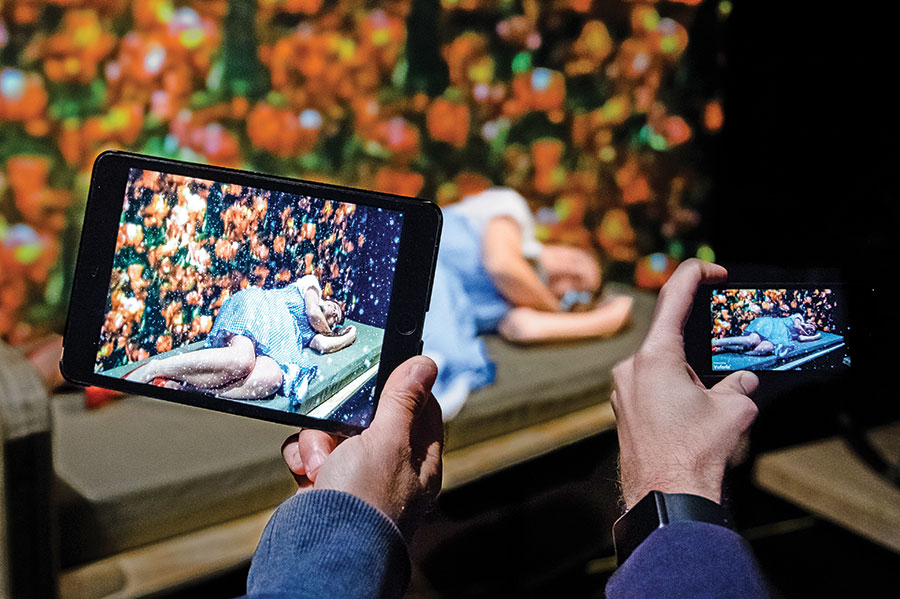
Please read the article from American Theatre "6 Shows That Perfectly Combine Tech and Text", regarding technology in Theatre. Write a comment below reacting to the article and about how you could envision using tech in Alice in Wonderland.
 |
| Courtesy of: americantheatre.org |
2) FOCUS YOUR WORK:
--Review the requirements of the script. HERE is the link to our shared doc.
--- Check out Ms. Grimes' inspiring images HERE.
--Remember the Director's Vision:
In Wonderland, the impossible is possible.
3) INSPIRATION BOARD:
Create an inspiration board by finding 15-20 images that you find inspiring for the show. Leave space for writing about each image!
(Try to vary these so that you're thinking about the different SET requirements.) I would like to put these on the boards, so please make a physical board. Cami, if you can send your Slide show BEFORE Monday, March 11, that would be helpful!)
Here is an example of a Inspiration Board that I made a LONG time ago for the Queen of Hearts' Chambers. I do NOT think that this board would be appropriate for this version of Alice, but I wanted to make sure you had a clear example of what I was looking for:
 |
| Example of Visual Research Poster - From a dark version of Alice in Wonderland -- The Queen of Heart's Chambers Emily Grimes
Above is an example of the Visual Research I used previously. It is not perfect, as it is missing the element of explaining how the design element might be used in your design. Notice that I was looking at several elements--hearts, columns, windows, etc. Be sure to include lots of elements in your design!
|
Monday, February 25, 2019
IB Theatre Showcase Videos
Congratulations on an incredible showcase! Here is the link to the videos for your different performances! (Thanks Aleandro!!)
 |
| Final IB Theatre Showcase Bow courtesy of: Fanny Guimaraes |
Commedia Summative
For your final write up, I would like you to do a condensed version of the Research Presentation, in written form. You must include sources, a works cited page, along with images (historical as well as your own.)
Part A1 & A2 -- Theatre in Context: Using a wide range of sources (at least 3), explain the context of Commedia dell'Arte and the specific conventions of the character you chose to research. Explain your interest in the character. (You are expected to use quotes, paraphrasing along with images to back up your work.)
Part B1 --Theatre in Practice: Experimenting with this Character -- How did you try out the character? What did you notice about working with the character? What worked and what did not?
Part B2 -- Theatre in Performance-- Discuss how you integrated the character in the final performance. How did you apply the conventions of the character to the performance? How did you choose to integrate the character into your piece. (If you switched characters, you should explain WHY you did so.)
Part D1 -- Evaluation and Reflection --After viewing your piece(s), what do you think was successful and what needed work? What are the major take-aways for you as a theatre practitioner? How will this work aid you in future performances?
You will be assessed using the IB Theatre rubric, using the criteria that applies to the write-up above. Here's the rubric (A, B & D1).
Page Limit : 5 pages, excluding works cited page
Double Spaced
Due: Thursday, February 28 (at the start of class)
Subscribe to:
Posts (Atom)